
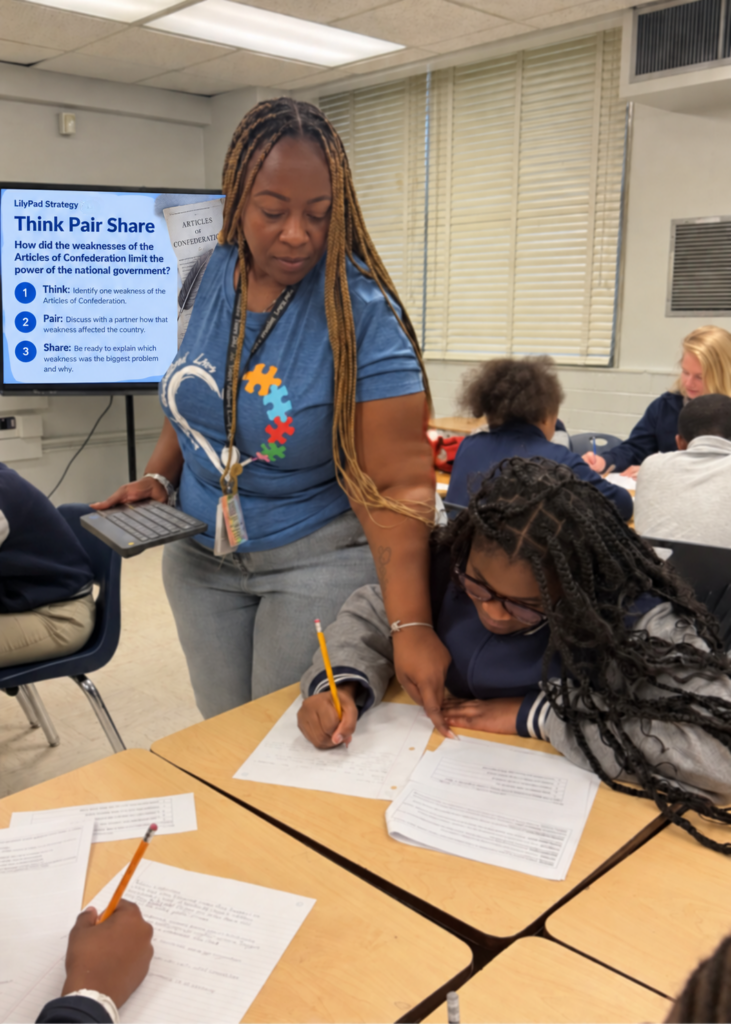
Monet Baker-Weatherspoon is a 7th grade civics teachers and social studies department chair in Jacksonville, Florida! She was also one of the 100 teachers in the inaugural class of We the Teachers.
During her week at the We the Teachers summit, Monet participated in experiential modeling of learning walls — a flexible, collaborative learning strategy to document learning. You can create a learning wall in a single class period, or, like Monet, a learning wall can document learning over the entire course of the year.
Here’s what Monet had to say about this learning experience:
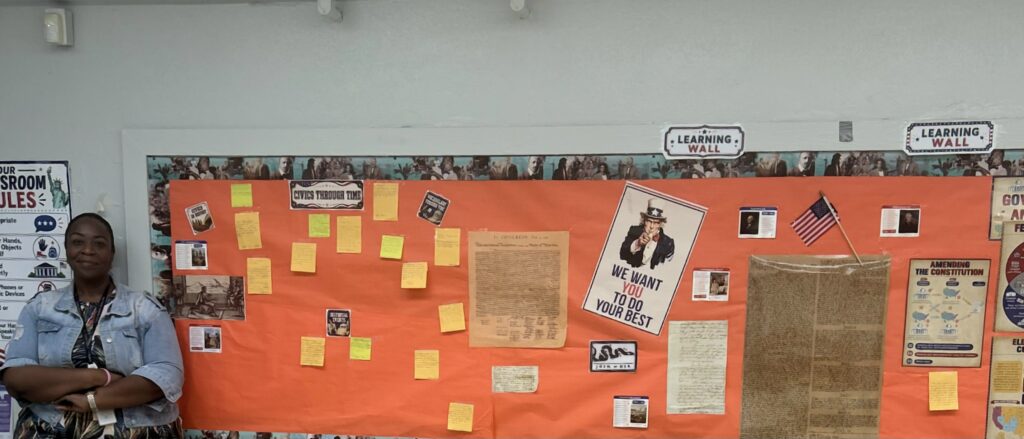
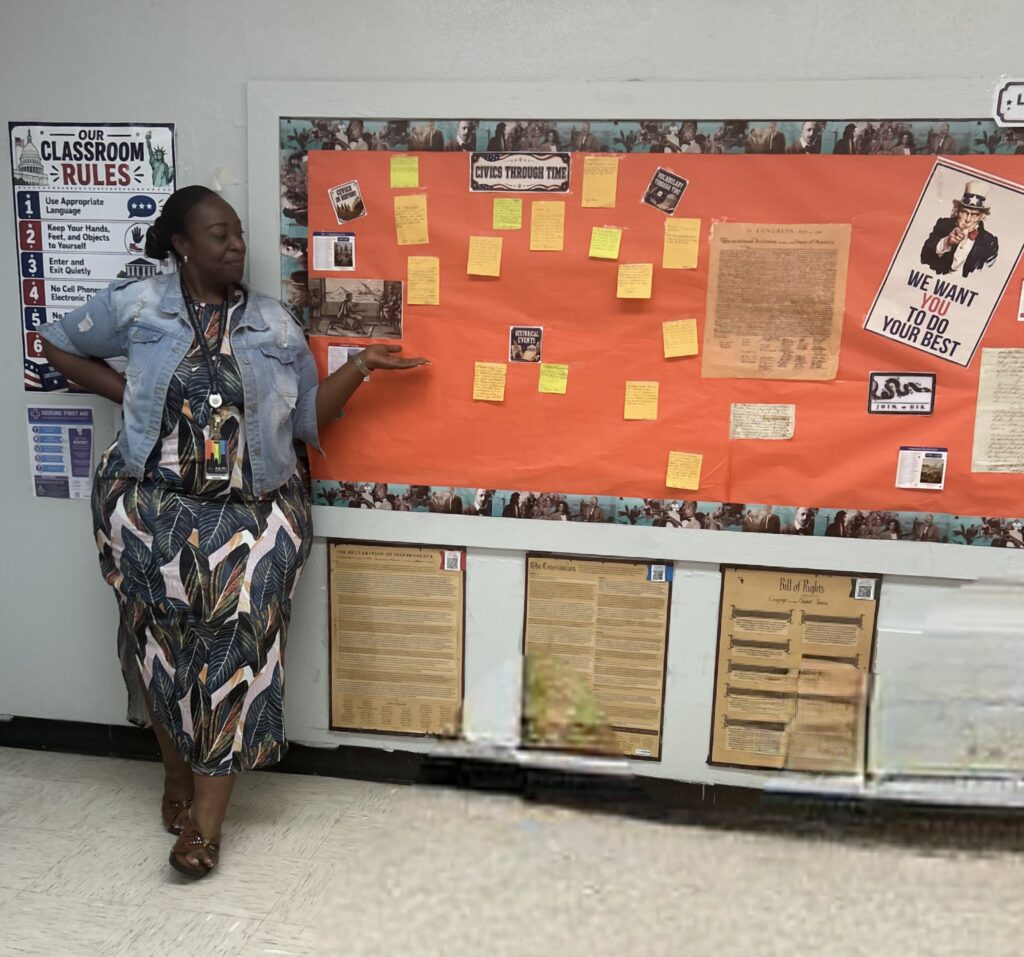
“One of the things I’m especially proud of is our interactive Civics Learning Wall, which has a little twist!
Our wall is divided into two parts: Civics Past and Civics Present. The first part explores the historical events, documents, and influences that shaped our government before the Declaration of Independence and the Constitution. The second part, Civics Present, will allow students to connect those historical foundations to the government and civic responsibilities we experience today.
We’re still building the first part of our wall as we move into the Articles of Confederation and the debates between the Federalists and Anti-Federalists, so the Civics Present section is still to come.
What has been most exciting is watching my students take ownership of the wall. They add sticky notes when something catches their attention, sparks a connection, or helps them better understand an event. As we approached the American Revolution and the Declaration of Independence, I noticed a significant increase in their participation.
The Quartering Act and Boston Tea Party were especially engaging. Students began making connections between the colonists’ experiences and their own understanding of fairness, rights, and government authority. Seeing those connections appear on their sticky notes has been one of my favorite parts of this experience.
The wall is more than a classroom display. It’s becoming a visual record of our learning, our conversations, and the moments when history begins to make sense to students.
My experience with We the Teachers and lilyPD continues to influence how I approach Civics instruction, particularly the importance of student voice, inquiry, and making meaningful connections.”


Log in to leave a comment