
Rebekah O’Dell
William & Mary
Rebekah O’Dell teaches 7th and 8th grade English in Richmond, Virginia. Before moving to middle school, Rebekah taught high schoolers for over a decade in classes ranging from inclusion to International Baccalaureate. Alongside Allison Marchetti, Rebekah is the founder of Moving Writers, a popular 6-12 writing blog, as well as the host of the Moving Writers Community. She is the author of four books on writing instruction: Writing With Mentors(2015), Beyond Literary Analysis (2018), and A Teacher’s Guide to Mentor Texts, 6-12 (2021), and Mini Moves for Every Writer (2025). She’s a frequent speaker, consultant, and workshop leader across the country.
Contributions
Sort by
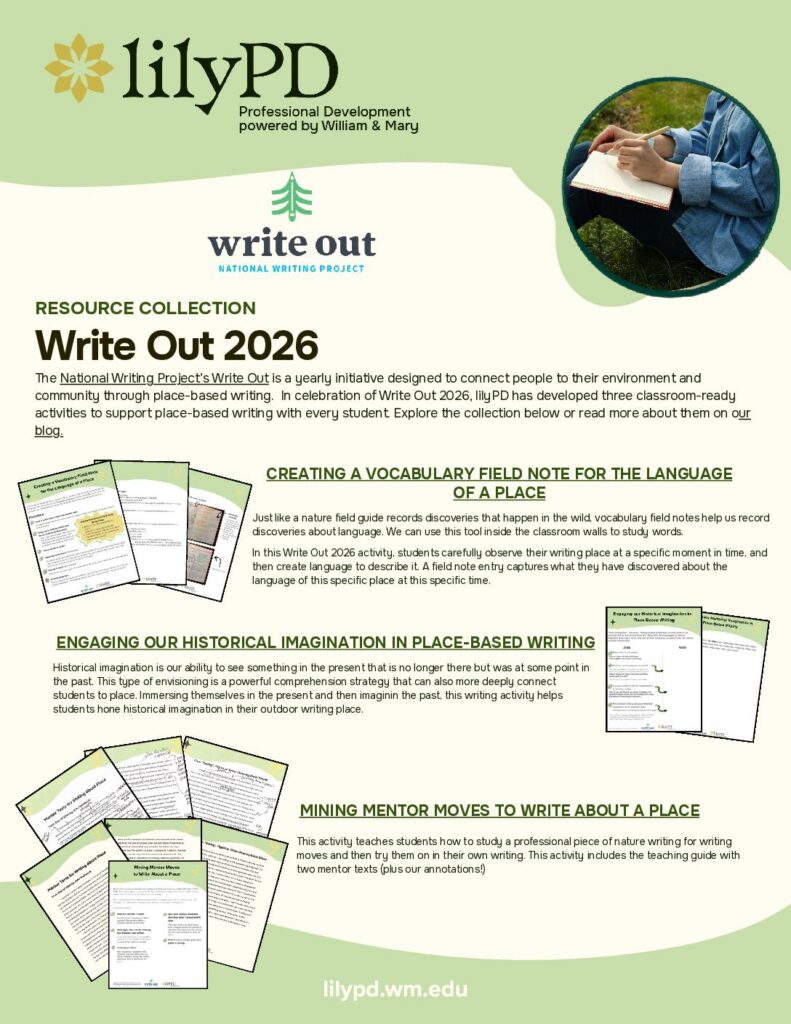
Place-Based Writing | Write Out 2026 Resource Collection
Course:
Building Evidence Based Arguments
Partner Collection
4-12
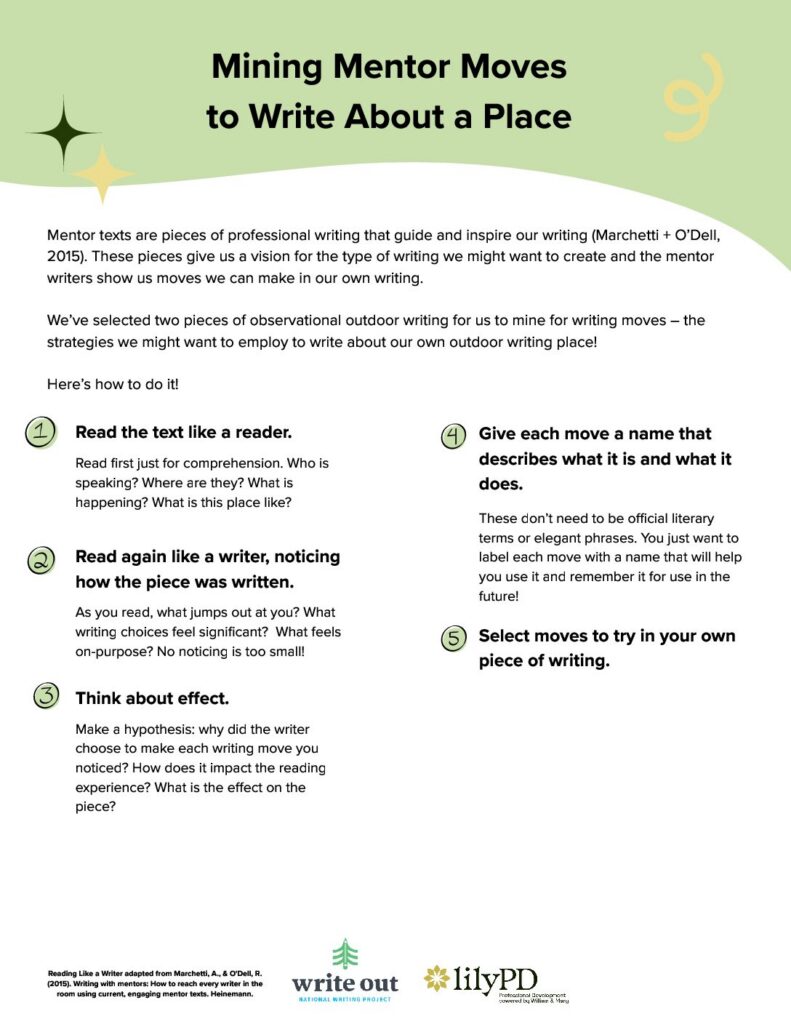
How to Study a Mentor Text About a Place (Write Out 2026)
Course:
Building Evidence Based Arguments
Student Activity
9-12
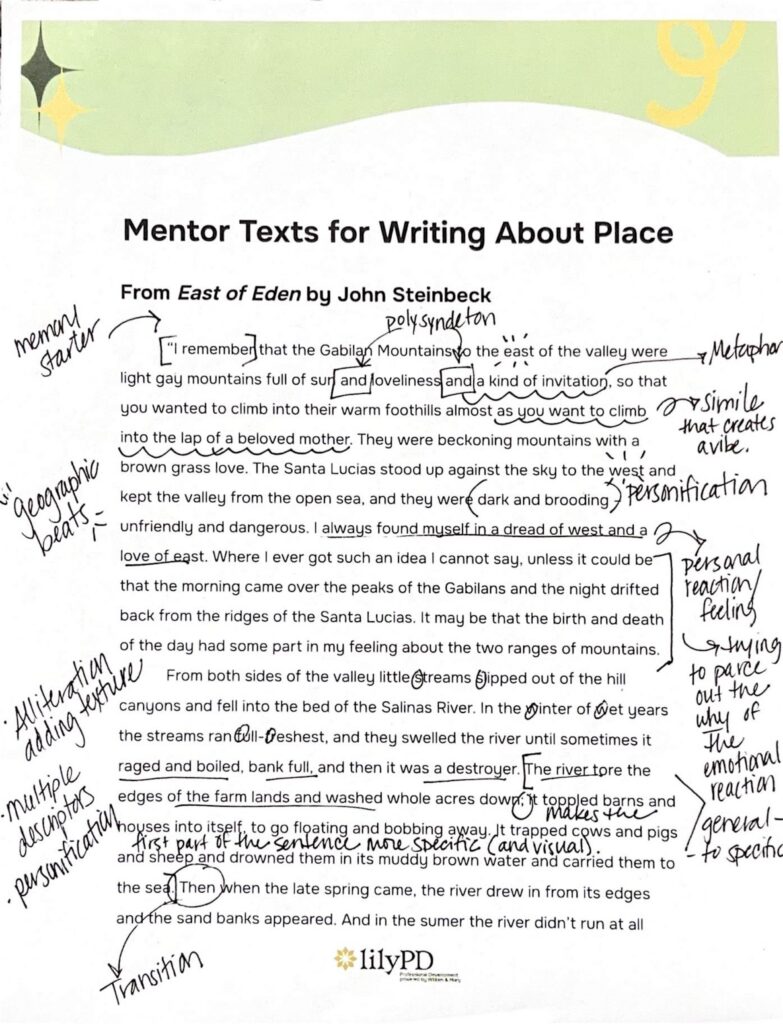
Annotated Mentor Texts for Writing About Place (Write Out 2026)
Course:
Building Evidence Based Arguments
Student Activity
9-12
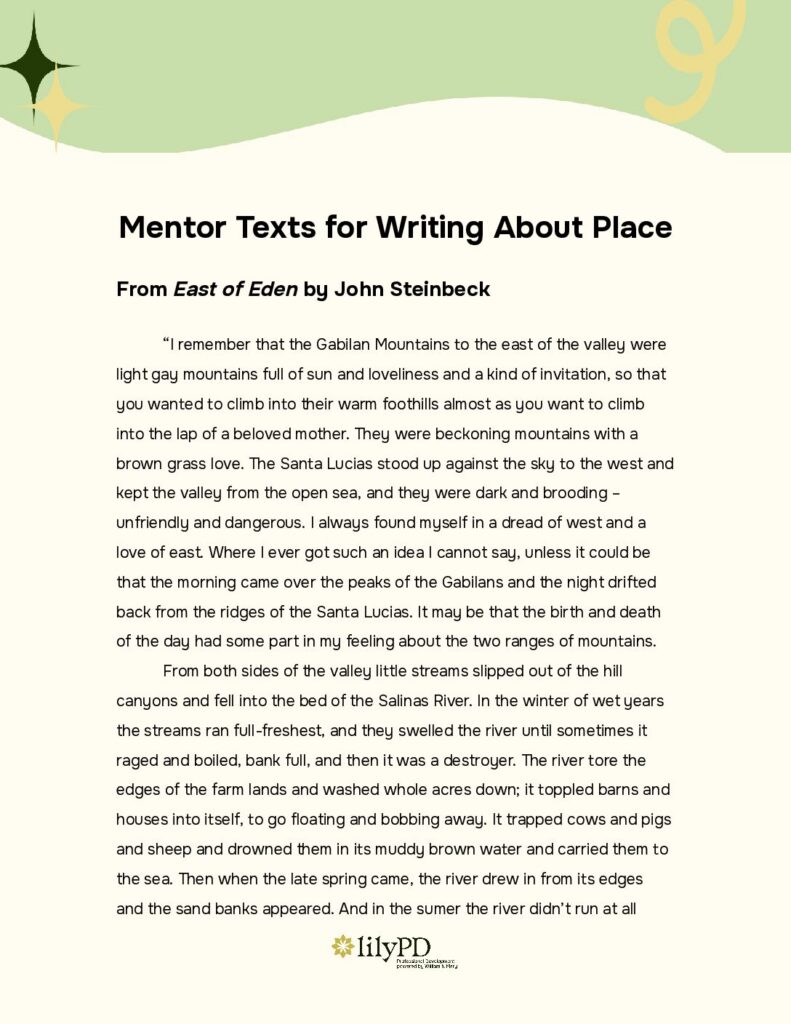
Mentor Texts for Writing About Place (Write Out 2026)
Course:
Building Evidence Based Arguments
Student Activity
4-12
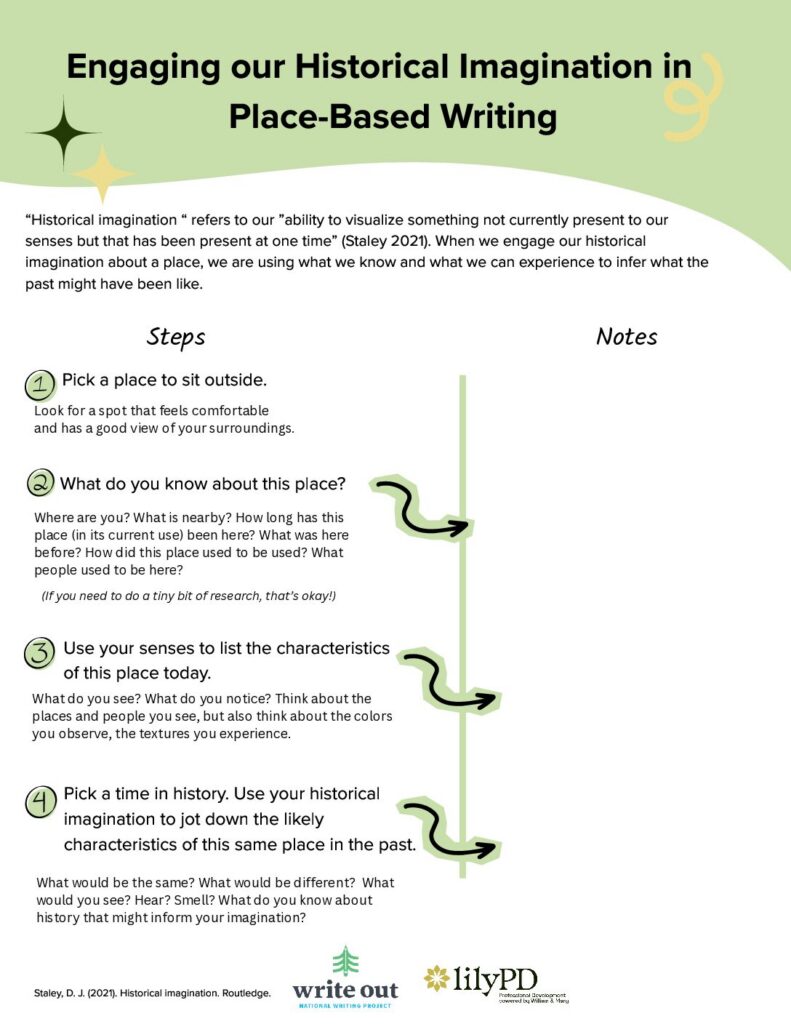
Engaging our Historical Imagination in Place-Based Writing (Write Out 2026)
Course:
Building Evidence Based Arguments
Student Activity
4-12
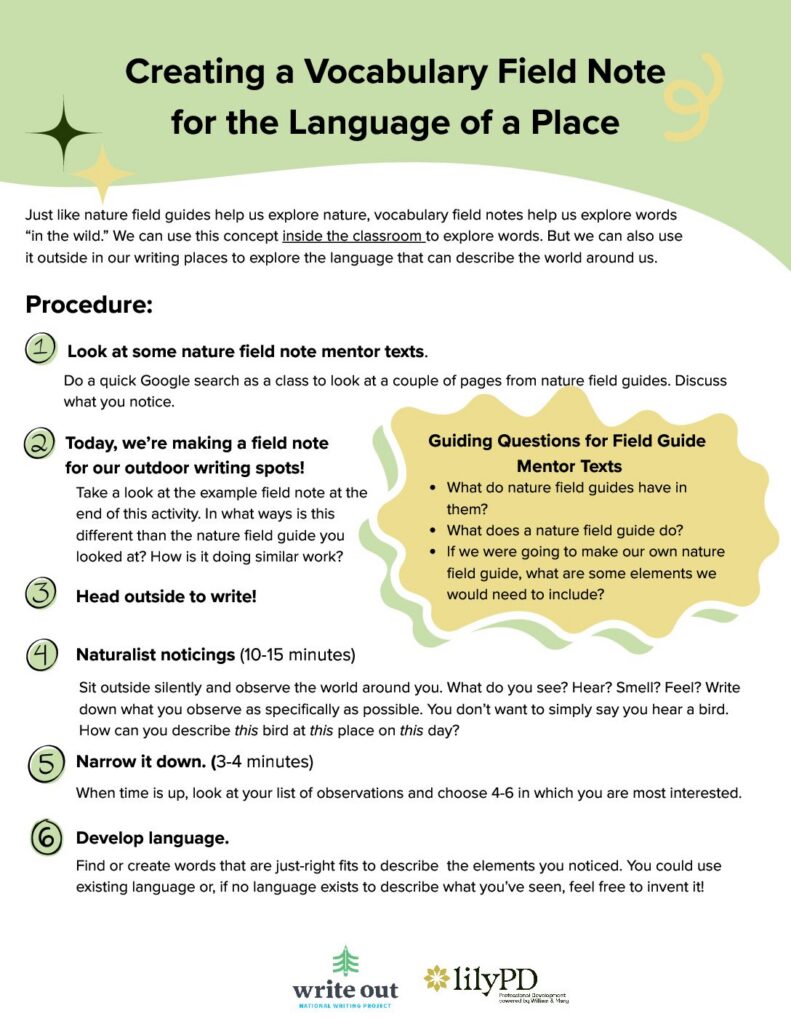
Field Note: Exploring the Language of Place (Write Out 2026)
Course:
Building Evidence Based Arguments
Student Activity
K-12
Evaluating Information – Applying the CRAAP Test
Course:
Building Evidence Based Arguments
Student Activity
6-12
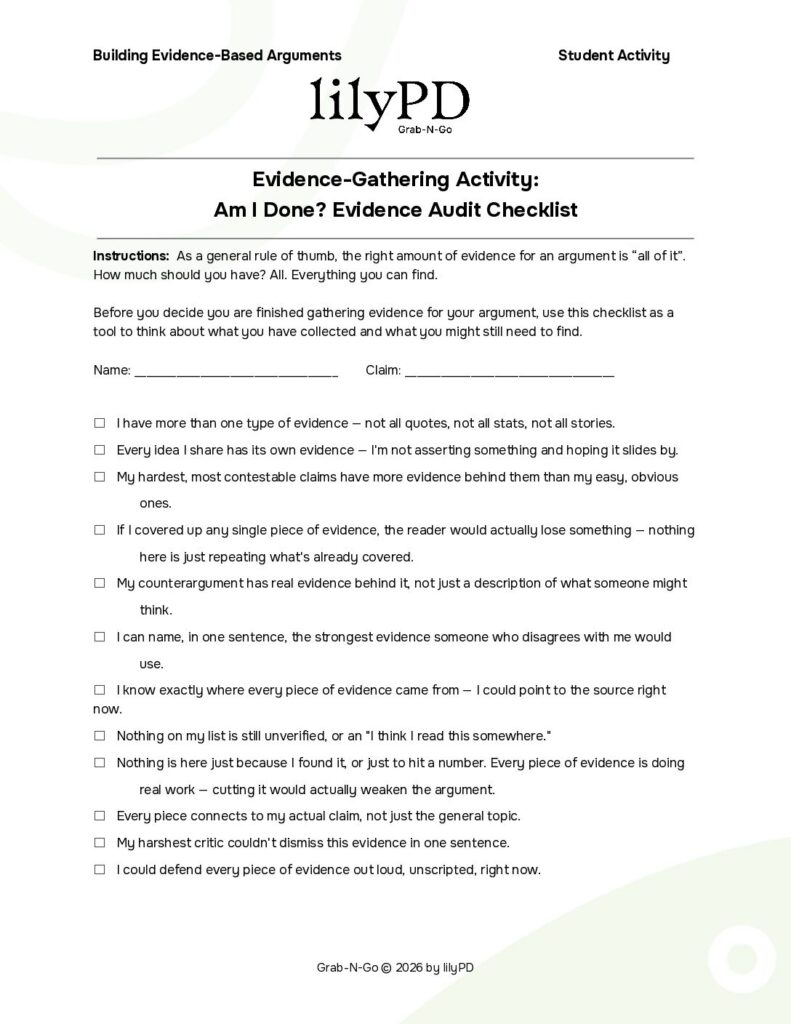
Evidence-Gathering Activity: Am I Done? Evidence Audit Checklist
Course:
Building Evidence Based Arguments
New
Student Activity
4-12
Argument Strategy: Claim or Not-a-Claim Game (Older Students)
Course:
Building Evidence Based Arguments
New
Student Activity
6-12

Argument Strategy: Claim or Not-a-Claim Game (Younger Students)
Course:
Building Evidence Based Arguments
New
Student Activity
4-7

One-Minute Arguments with 250 to 250 Slides
Course:
Building Evidence Based Arguments
Teaching Guide
4-12
Micro-Project: One-Minute Arguments with 250 to 250
Course:
Building Evidence Based Arguments
Teaching Guide
4-12
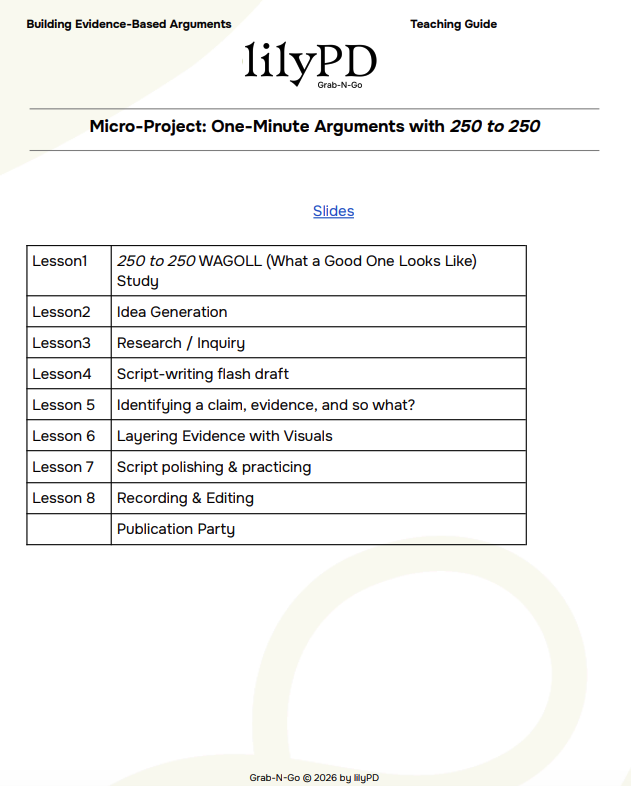
Argument-Building Practice: Build-an-Argument Gallery Walk
Course:
Building Evidence Based Arguments
Teaching Guide
4-12
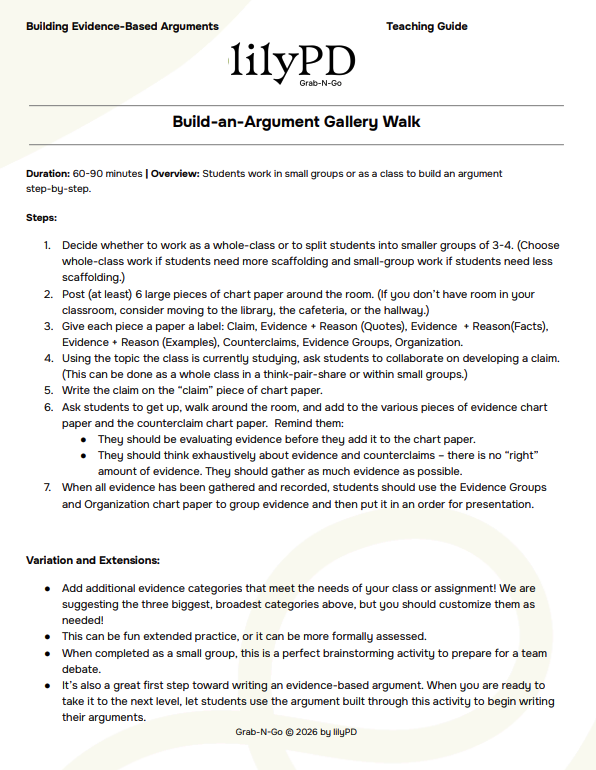
Argument-Building Practice: Audience Swap
Course:
Building Evidence Based Arguments
Teaching Guide
4-12
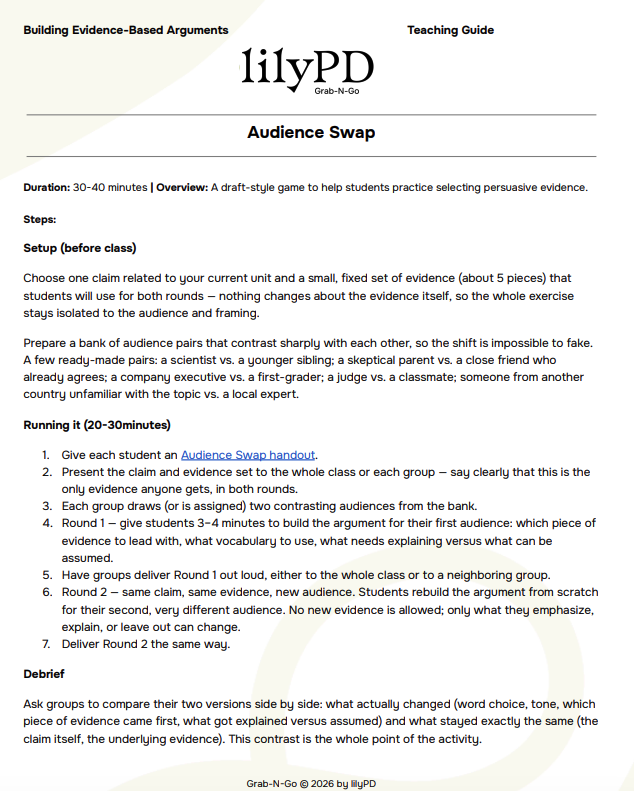
Argument-Building Practice: Evidence Draft
Course:
Building Evidence Based Arguments
Teaching Guide
4-12
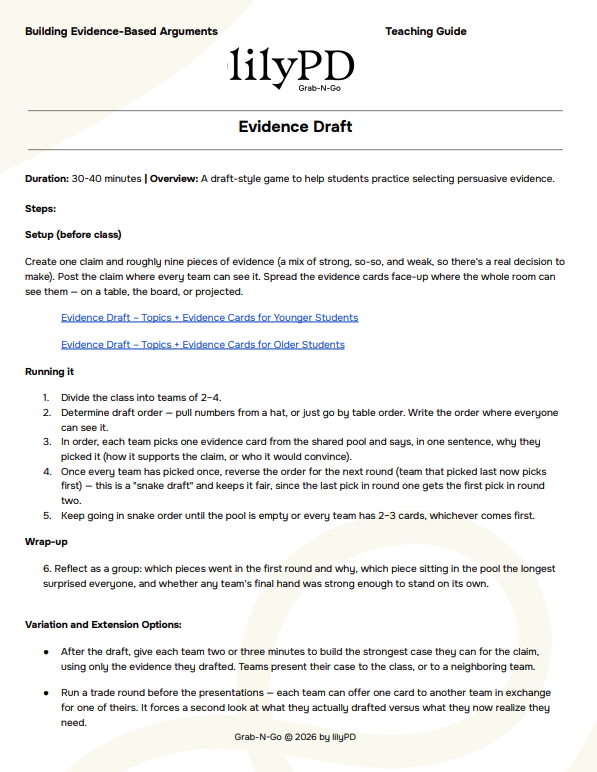
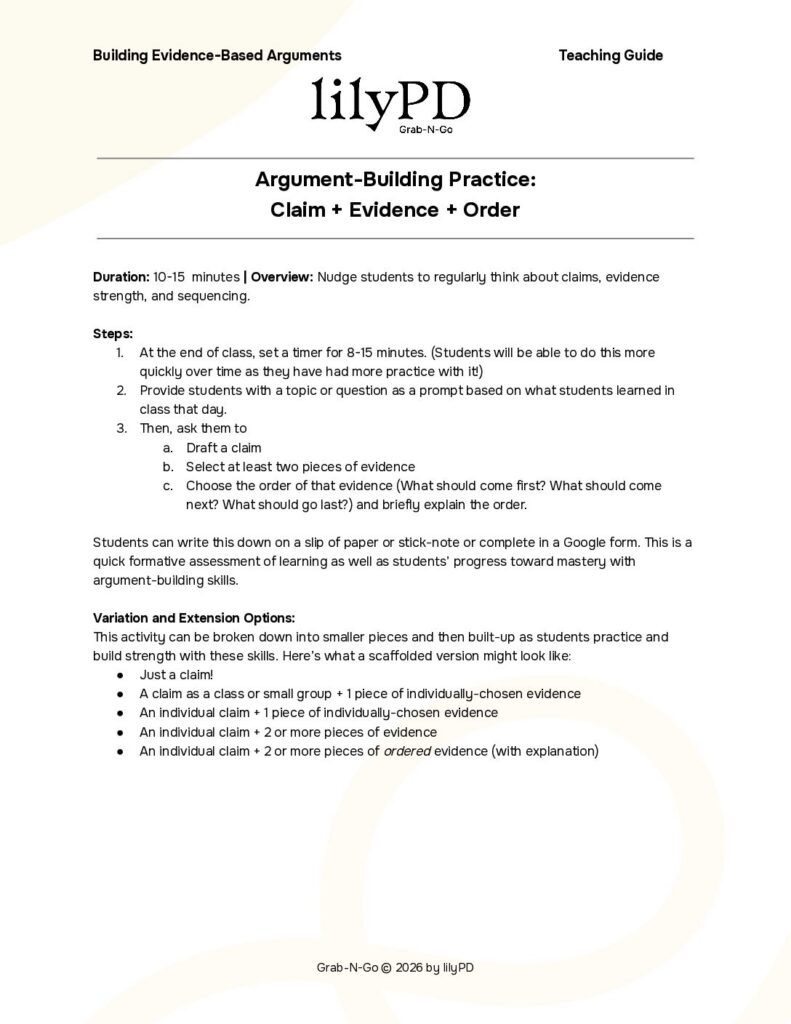
Argument-Building Practice: Claim + Evidence + Order
Course:
Building Evidence Based Arguments
Teaching Guide
4-12
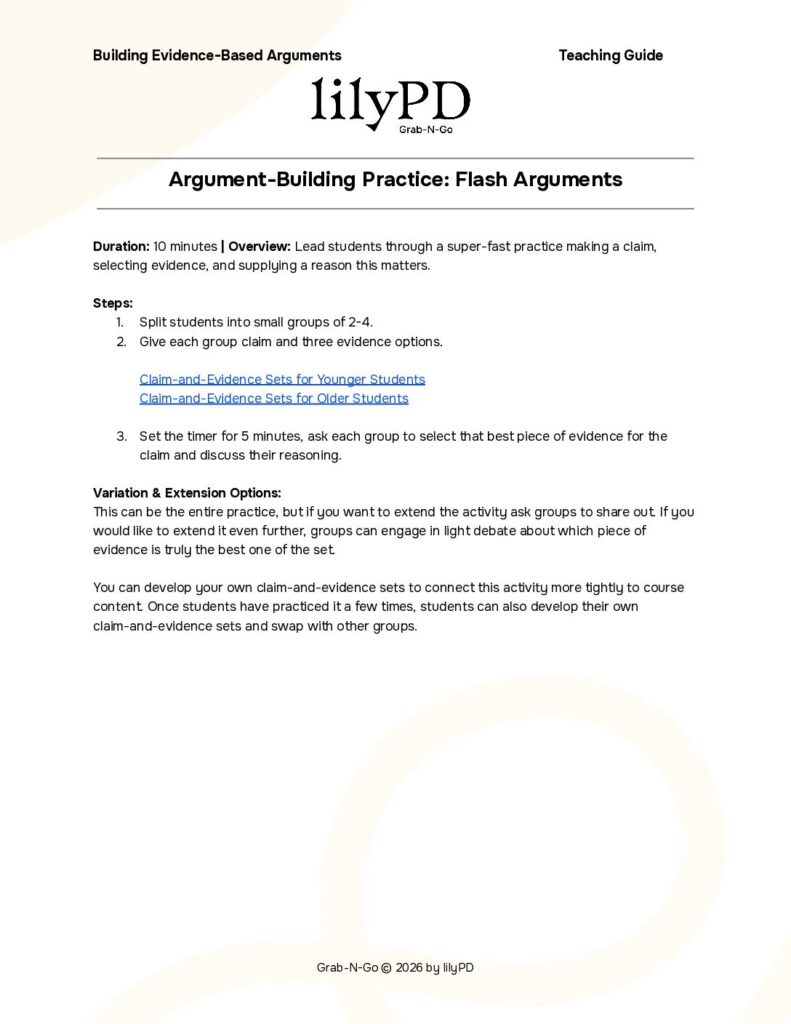
Argument-Building Practice: Flash Argument
Course:
Building Evidence Based Arguments
Teaching Guide
4-12
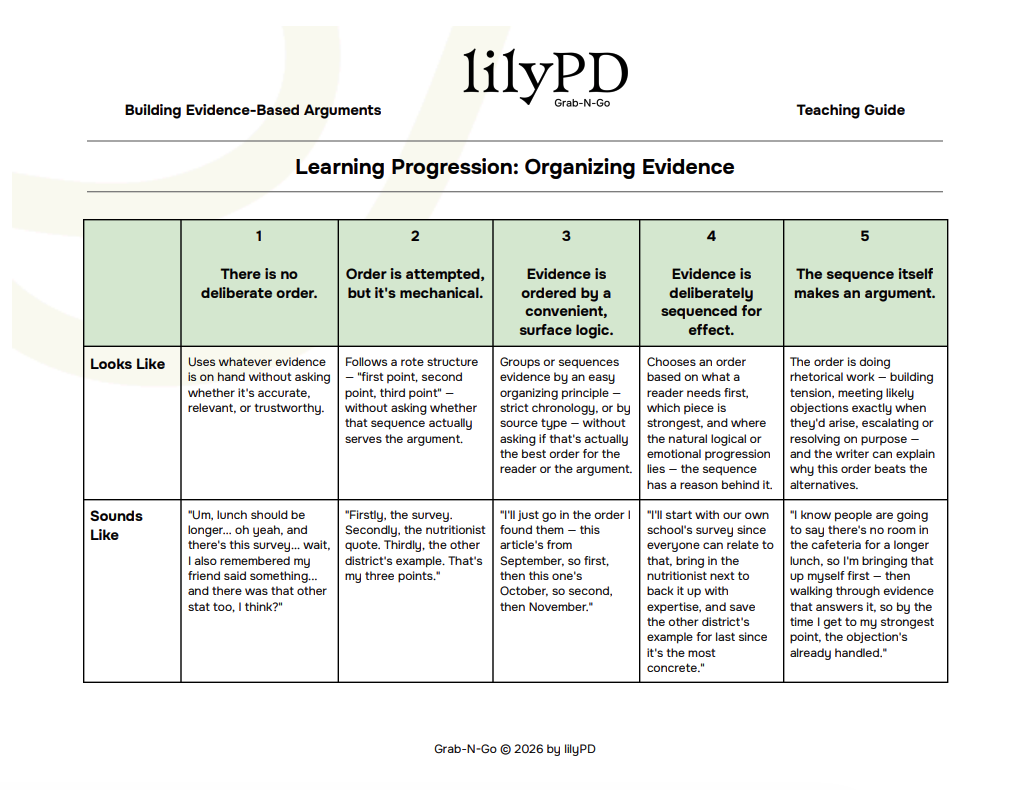
Learning Progression: Organizing Evidence
Course:
Building Evidence Based Arguments
Teaching Guide
K-12
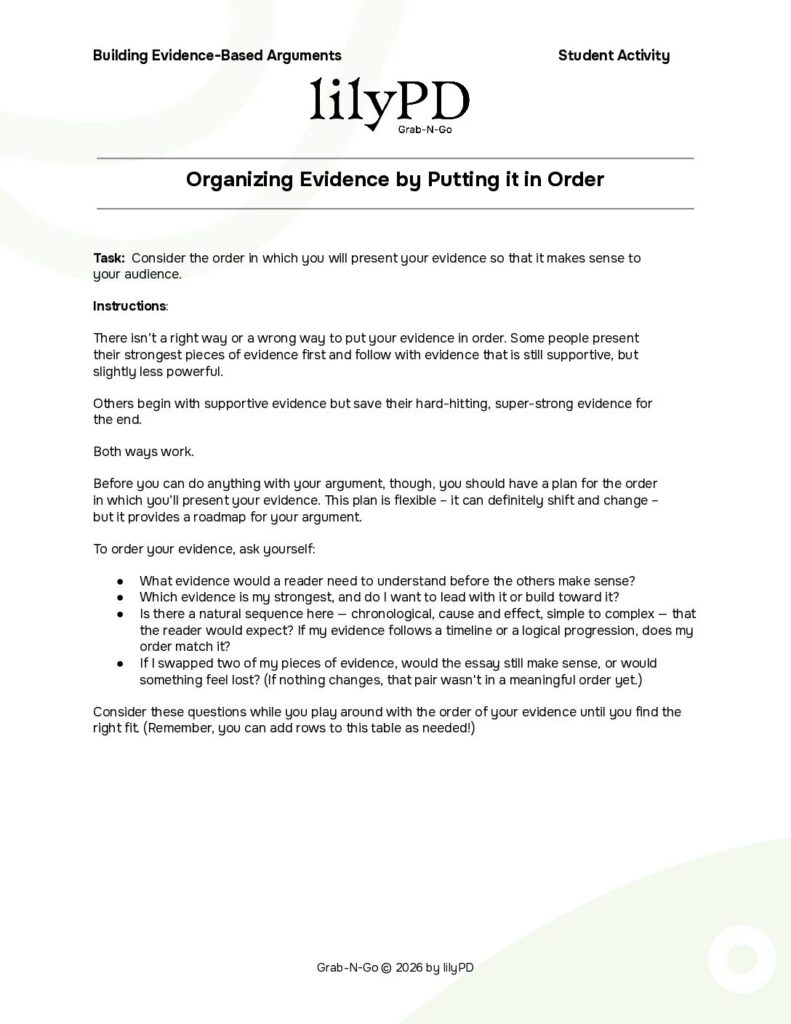
Organizing Evidence by Putting it in Order
Course:
Building Evidence Based Arguments
Student Activity
6-12
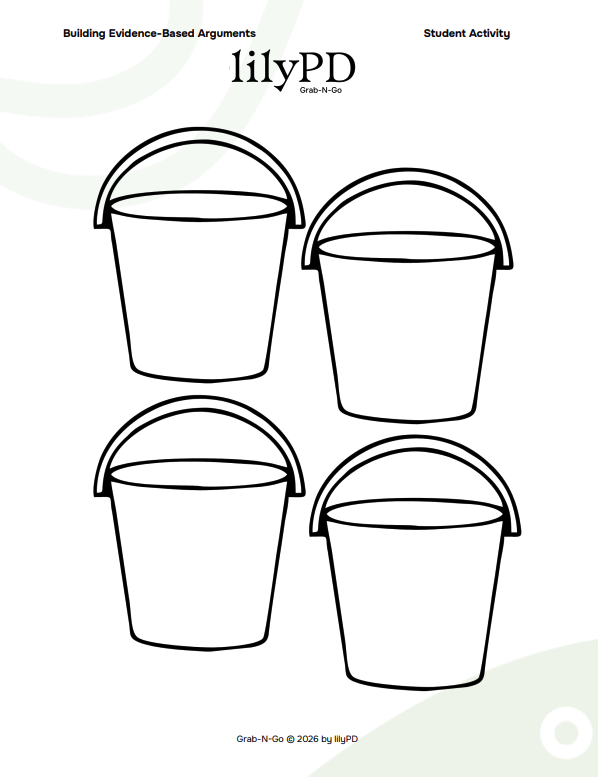
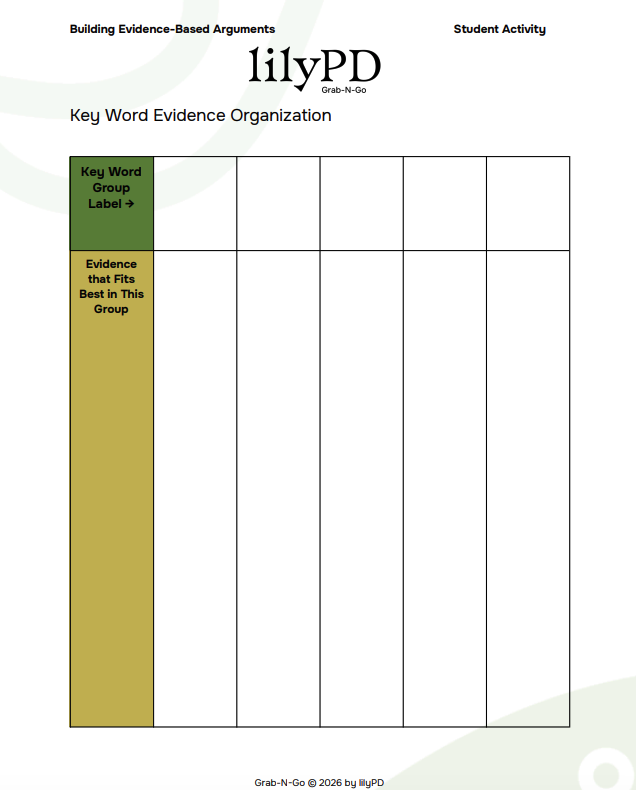
Organizing Evidence with Evidence Buckets
Course:
Building Evidence Based Arguments
Student Activity
4-12
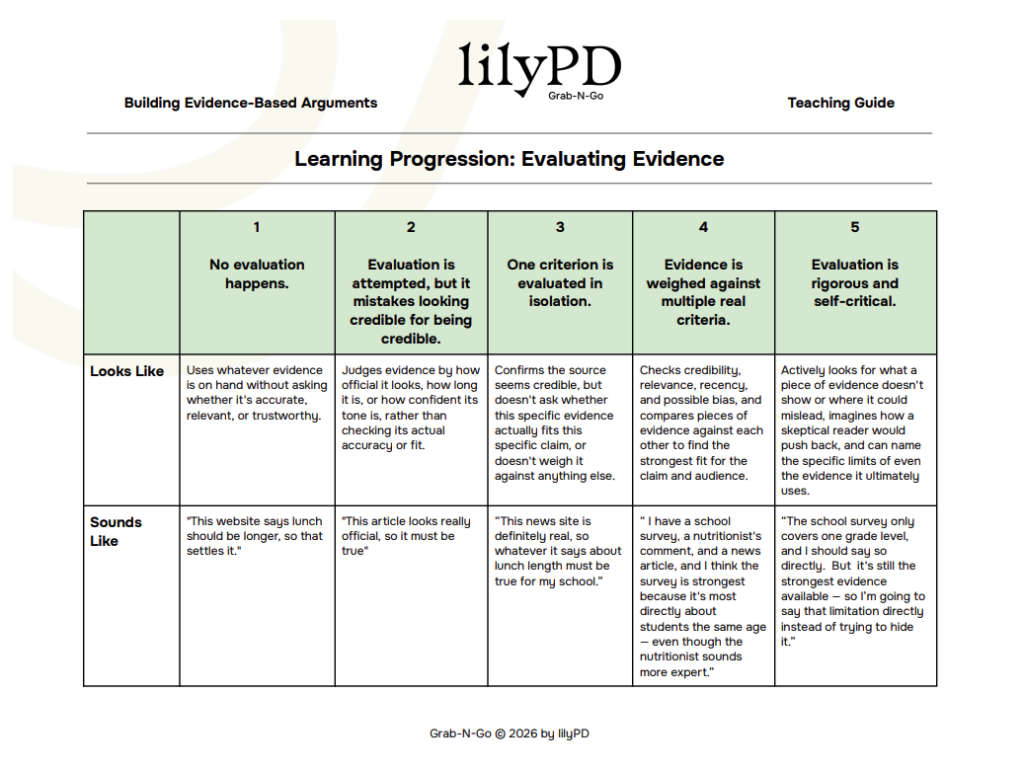
Learning Progression: Evaluating Evidence
Course:
Building Evidence Based Arguments
Teaching Guide
K-12
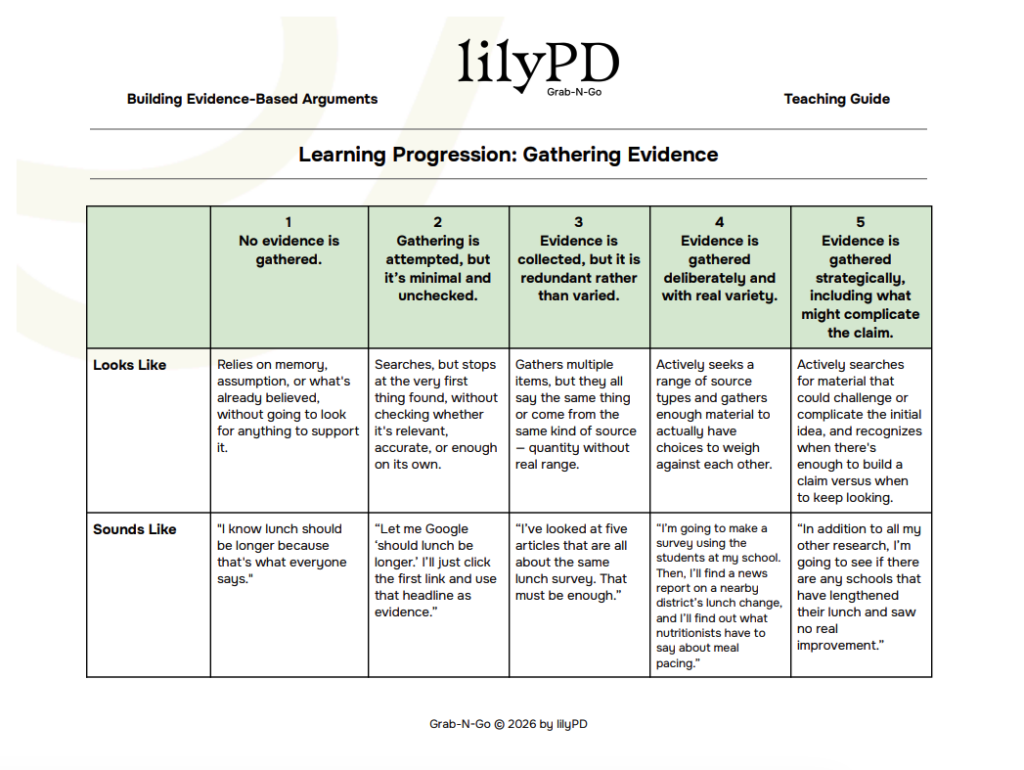
Learning Progression: Gathering Evidence
Course:
Building Evidence Based Arguments
Teaching Guide
K-12
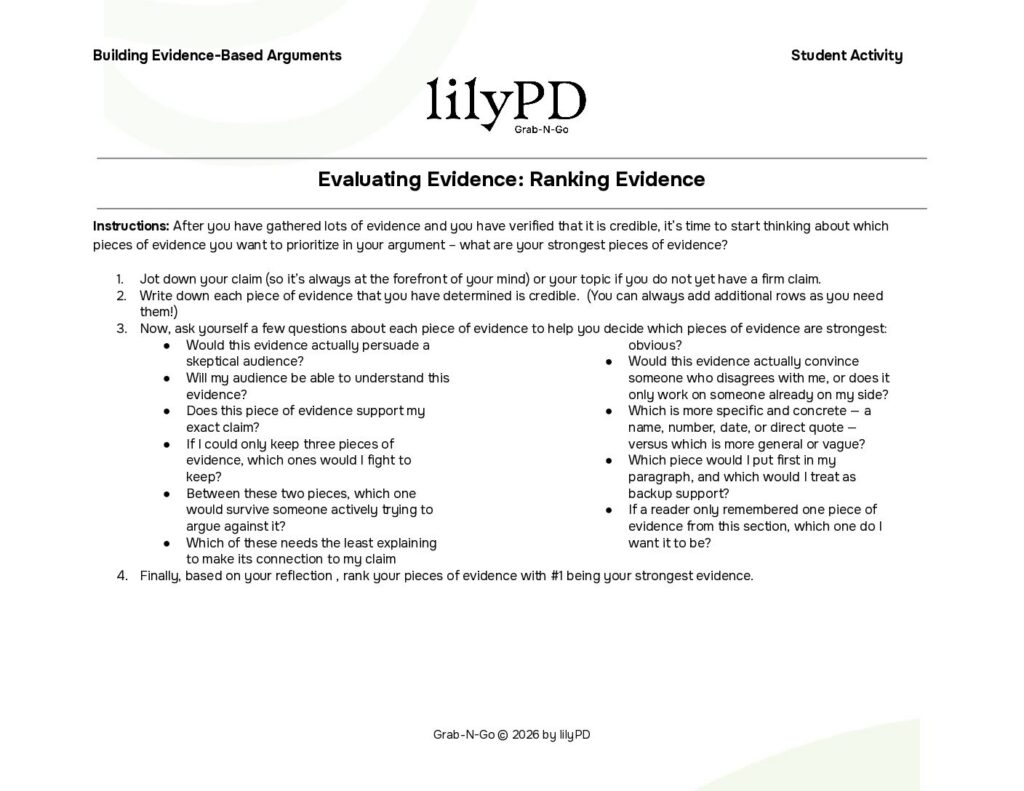
Evaluating Evidence: Ranking Evidence
Course:
Building Evidence Based Arguments
Student Activity
9-12
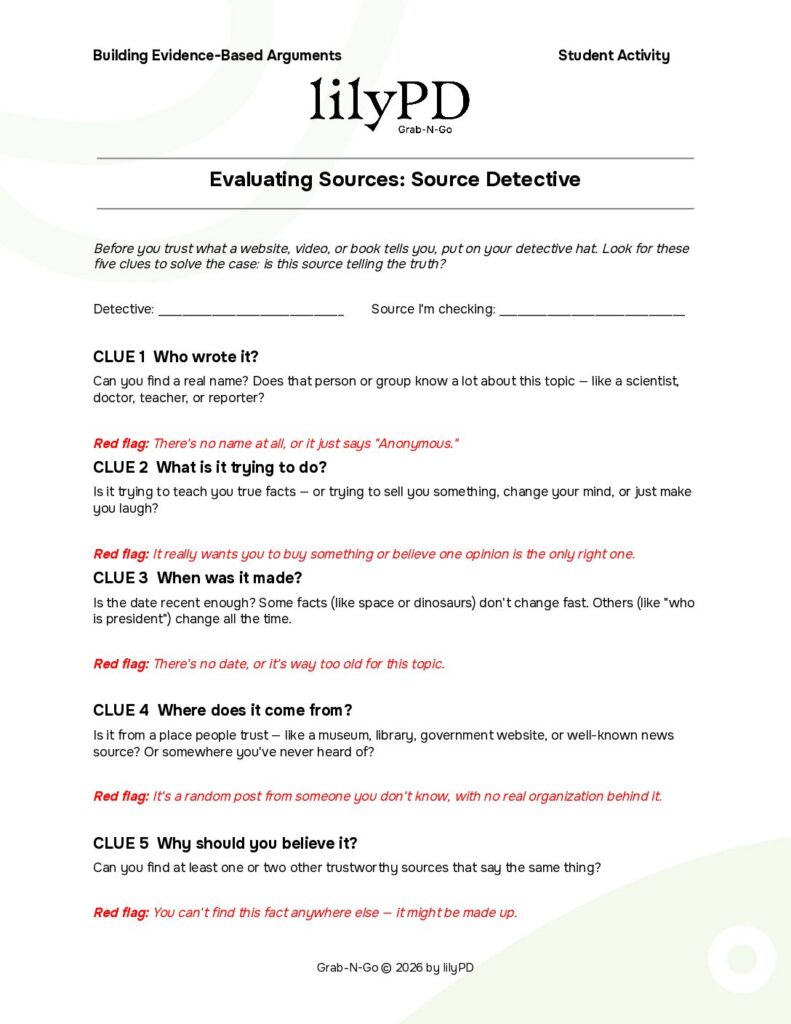
Evaluating Evidence: Source Detective
Course:
Building Evidence Based Arguments
Student Activity
4-7
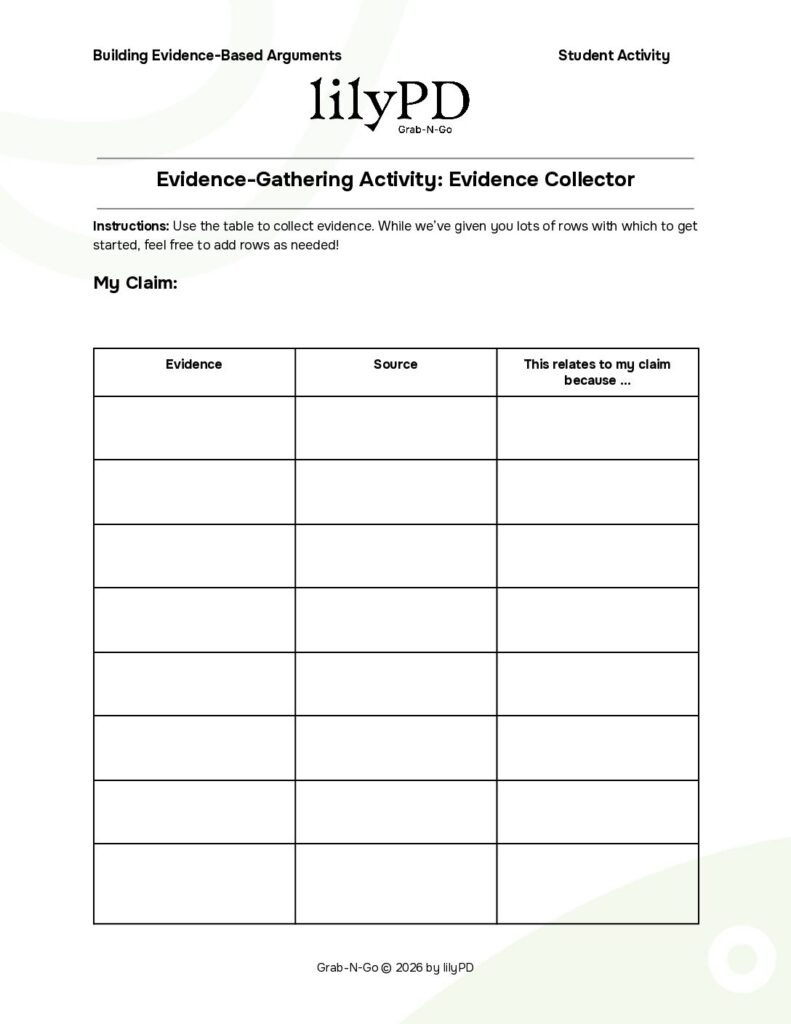
Evidence-Gathering Activity: Evidence Collector
Course:
Building Evidence Based Arguments
Student Activity
6-12
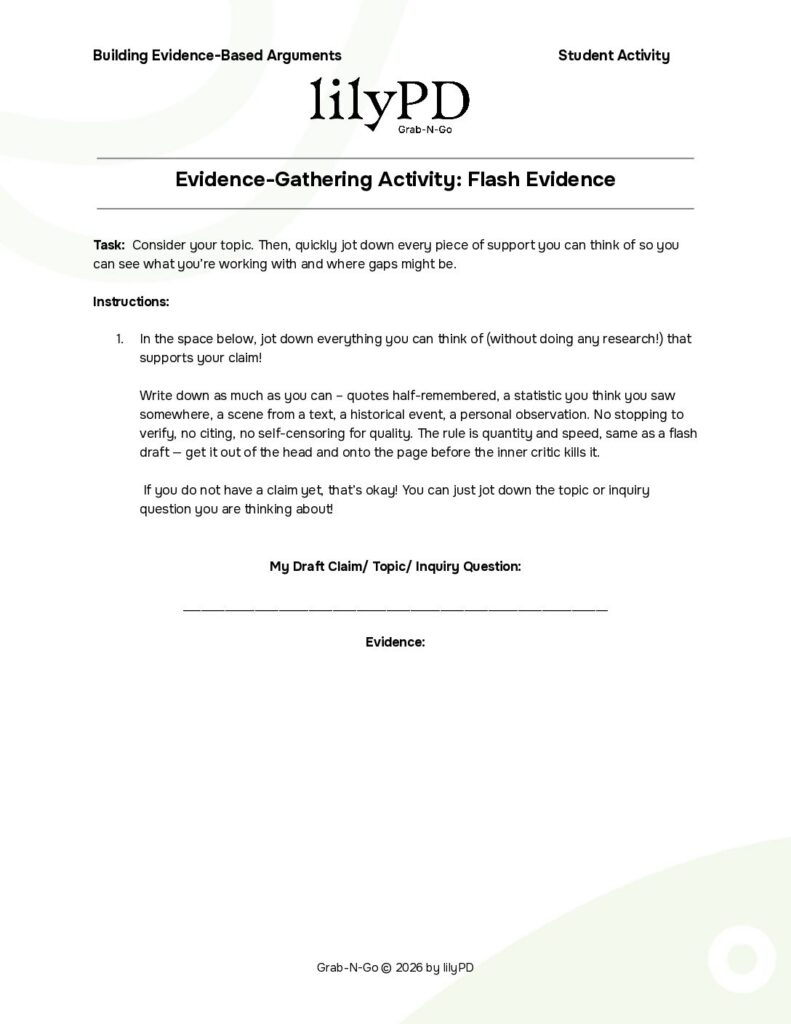
Evidence-Gathering Activity: Flash Evidence
Course:
Building Evidence Based Arguments
Student Activity
4-12
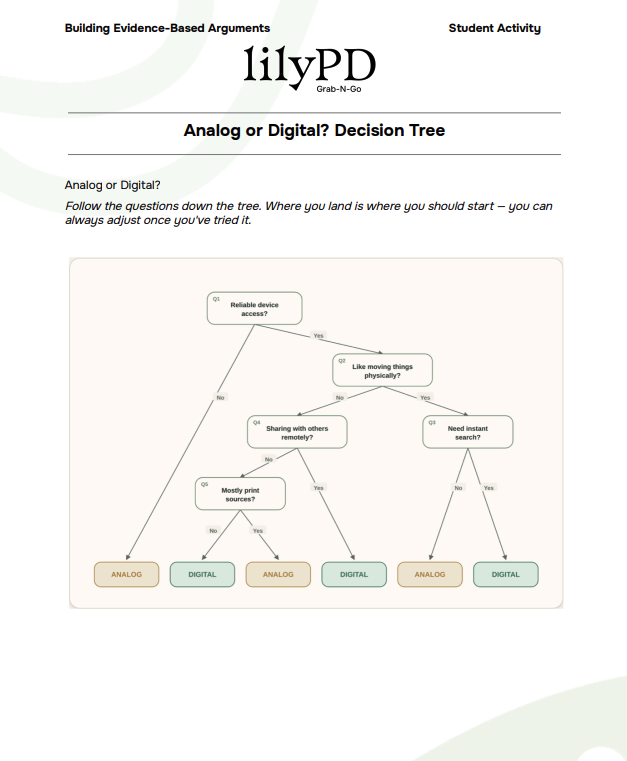
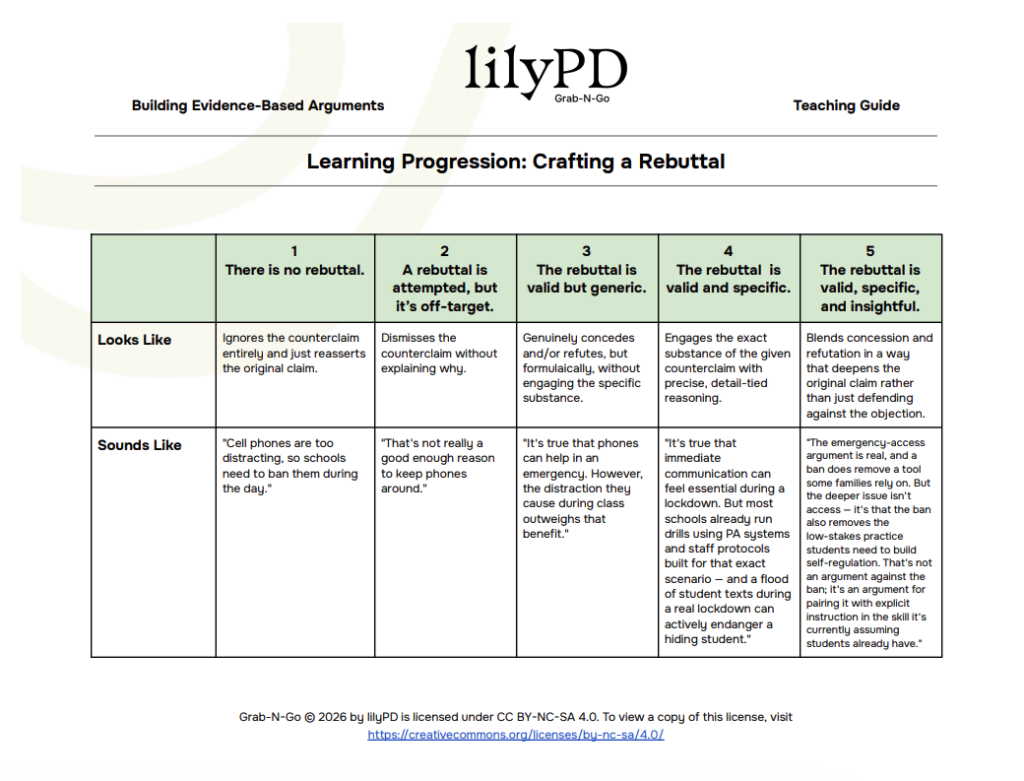
Learning Progression: Crafting a Rebuttal
Course:
Building Evidence Based Arguments
Teaching Guide
K-12
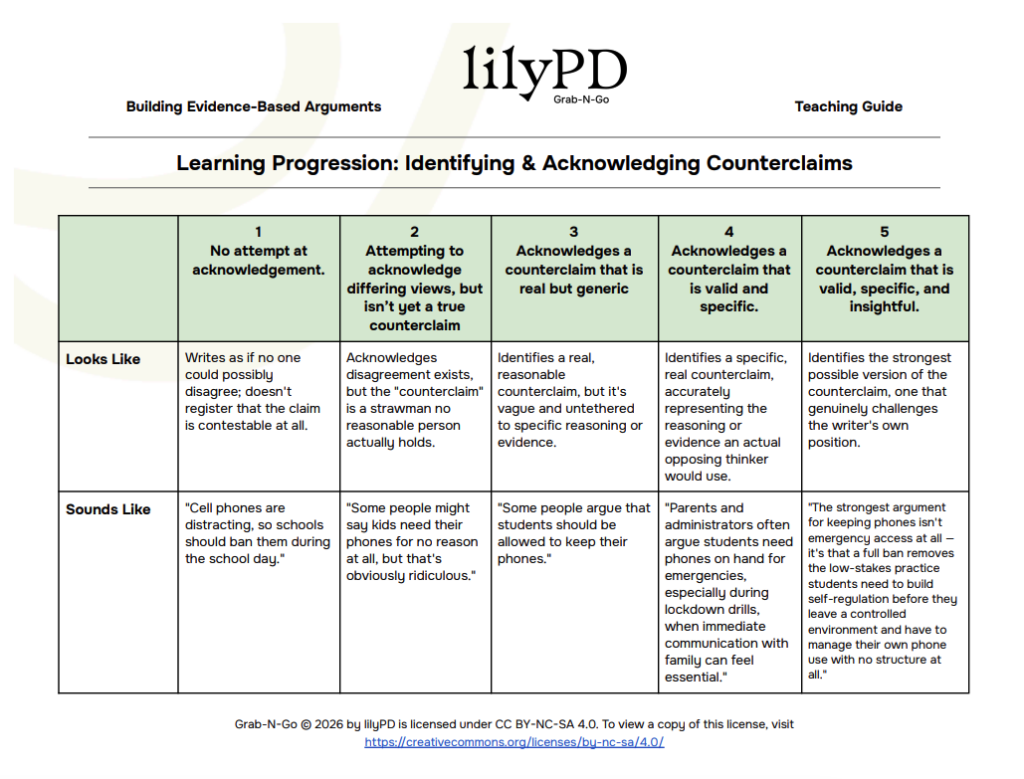
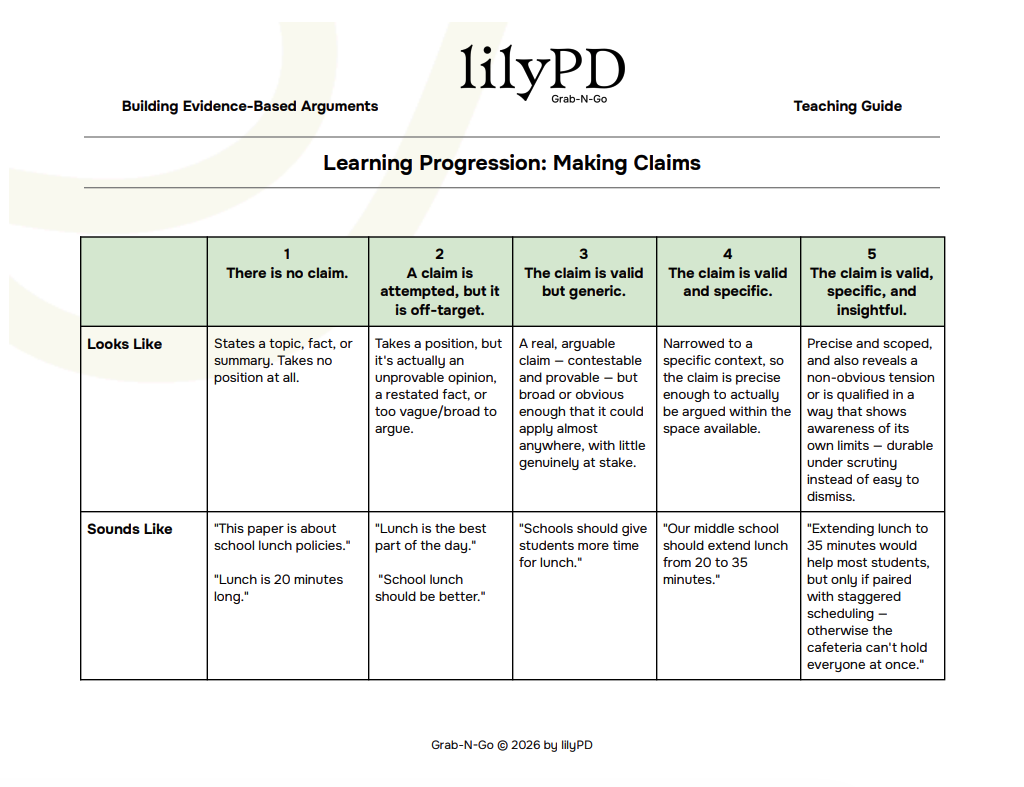
Learning Progression: Identifying & Acknowledging Counterclaims
Course:
Building Evidence Based Arguments
Teaching Guide
K-12
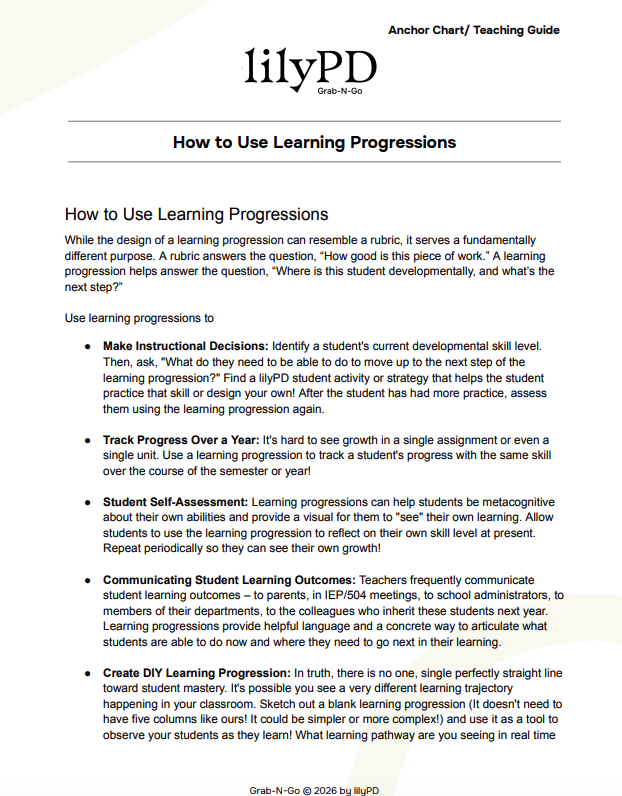
Sentence Stems for Conceding and Refuting (Older Students)
Course:
Building Evidence Based Arguments
Student Activity
6-12
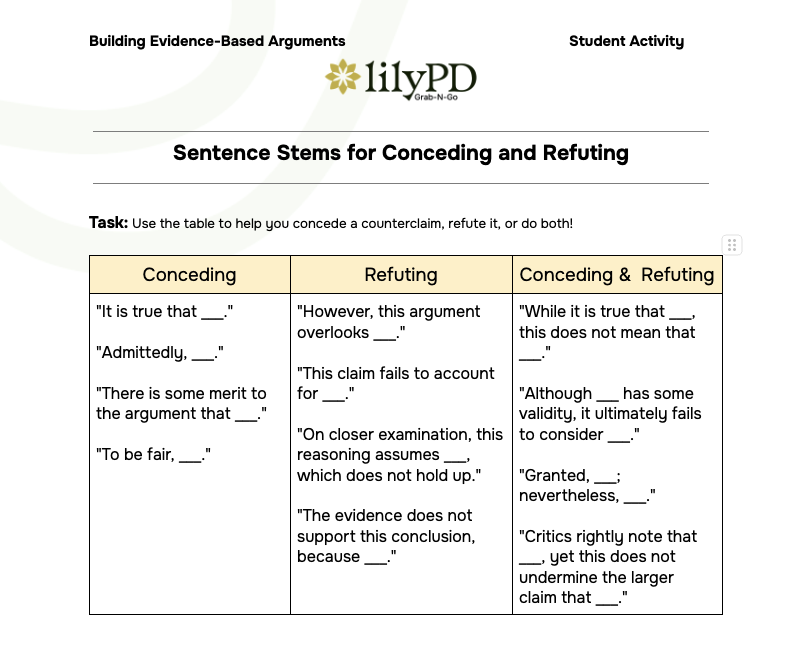
Sentence Stems for Conceding and Refuting (Younger Students)
Course:
Building Evidence Based Arguments
Student Activity
4-7
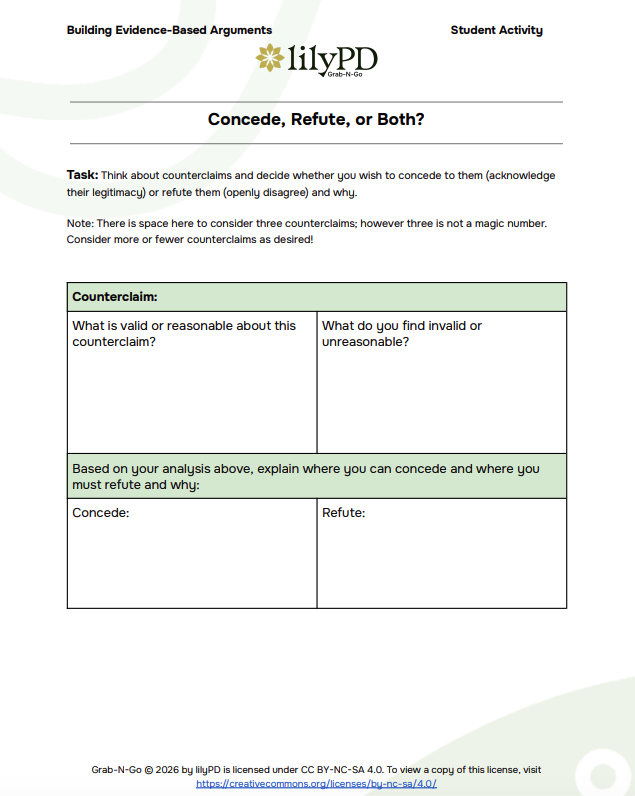
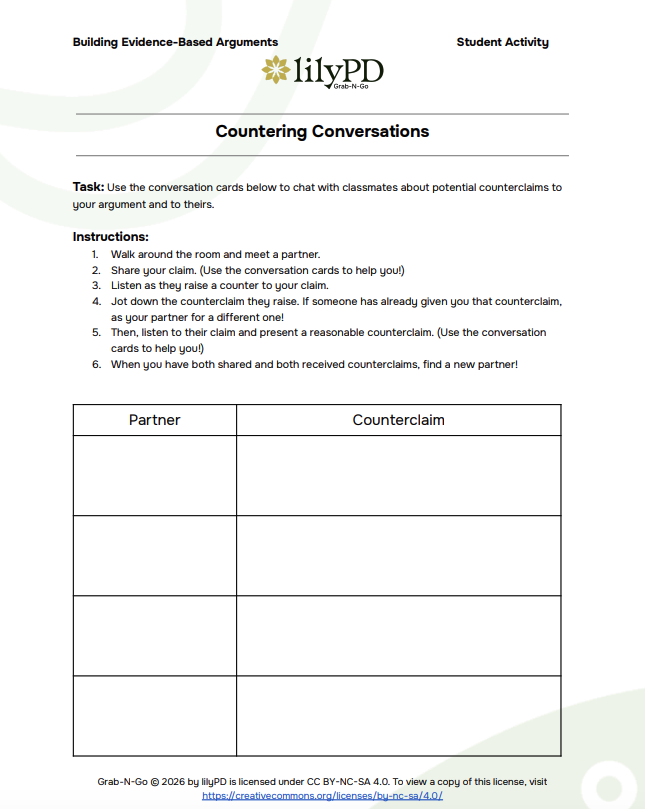
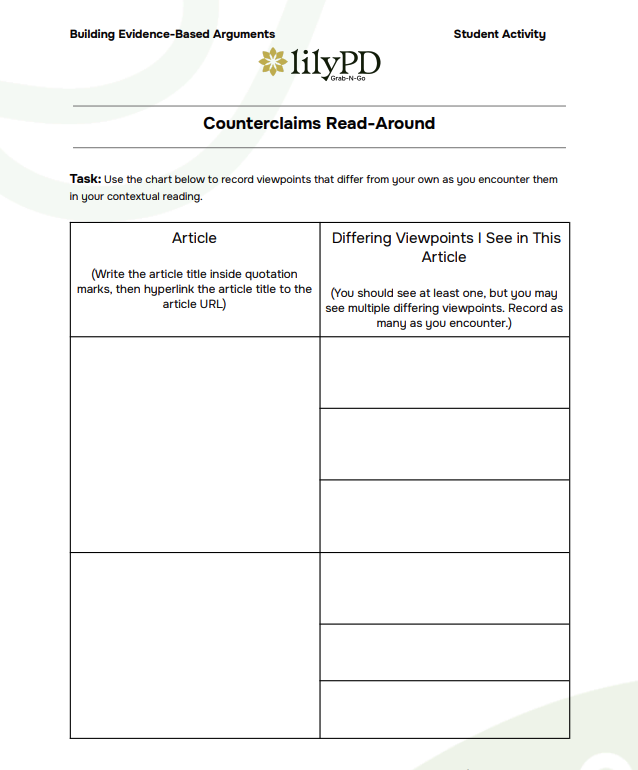

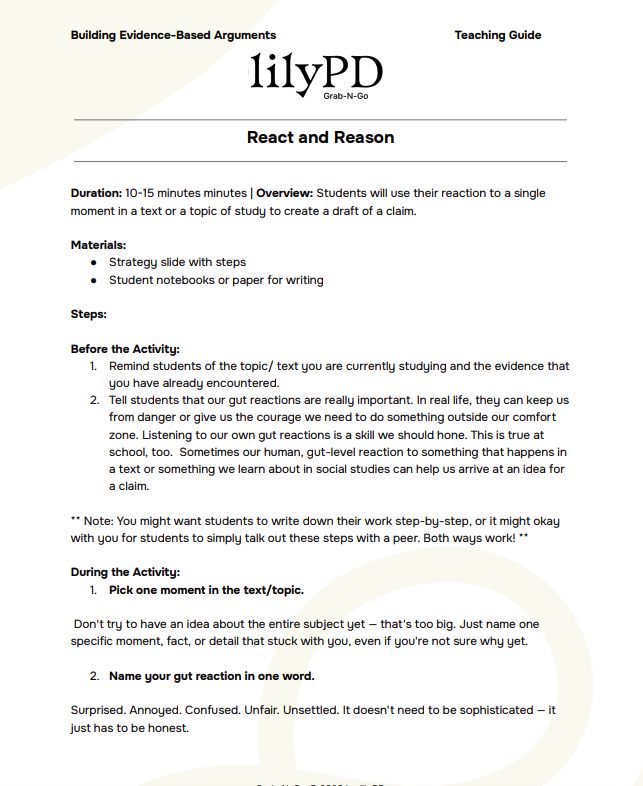
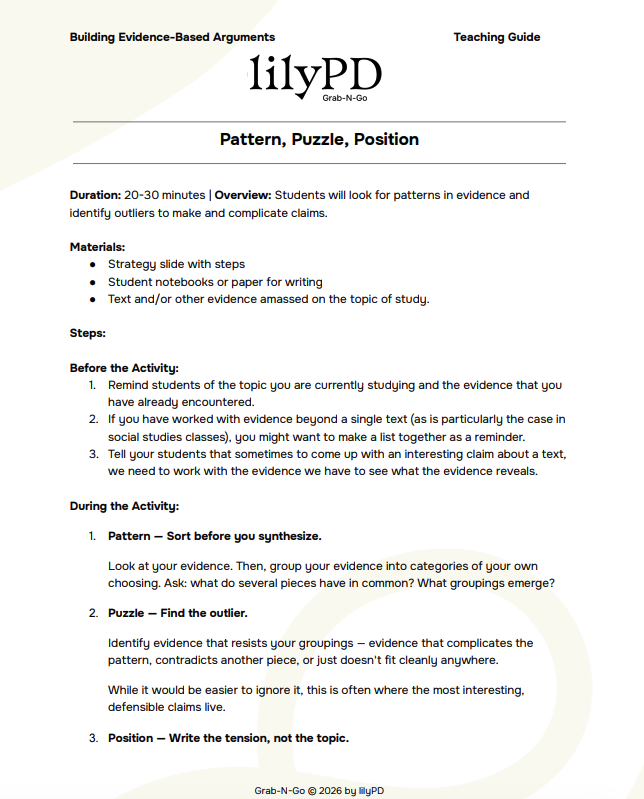
Pattern, Puzzle, Position Teaching Guide
Course:
Building Evidence Based Arguments
Teaching Guide
4-12
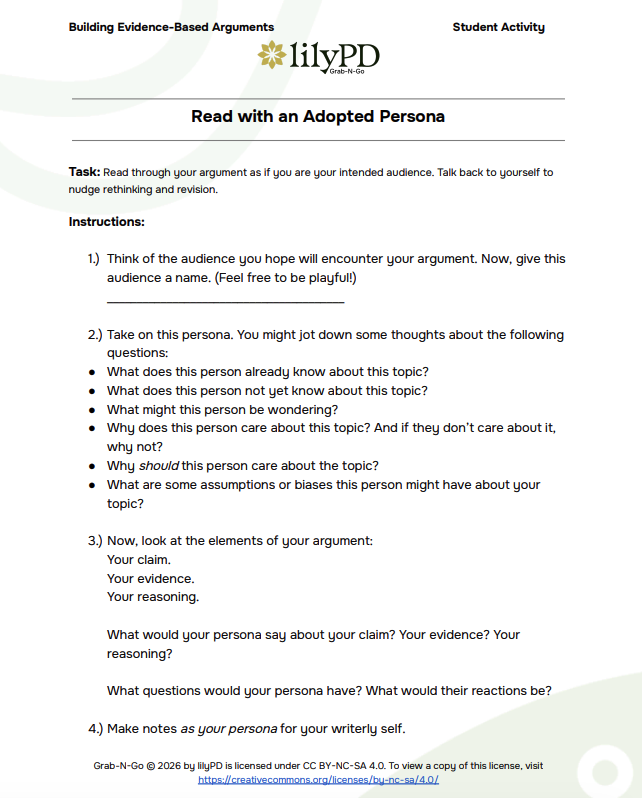
Considering Audience: Audience Checklist
Course:
Building Evidence Based Arguments
Student Activity
4-12
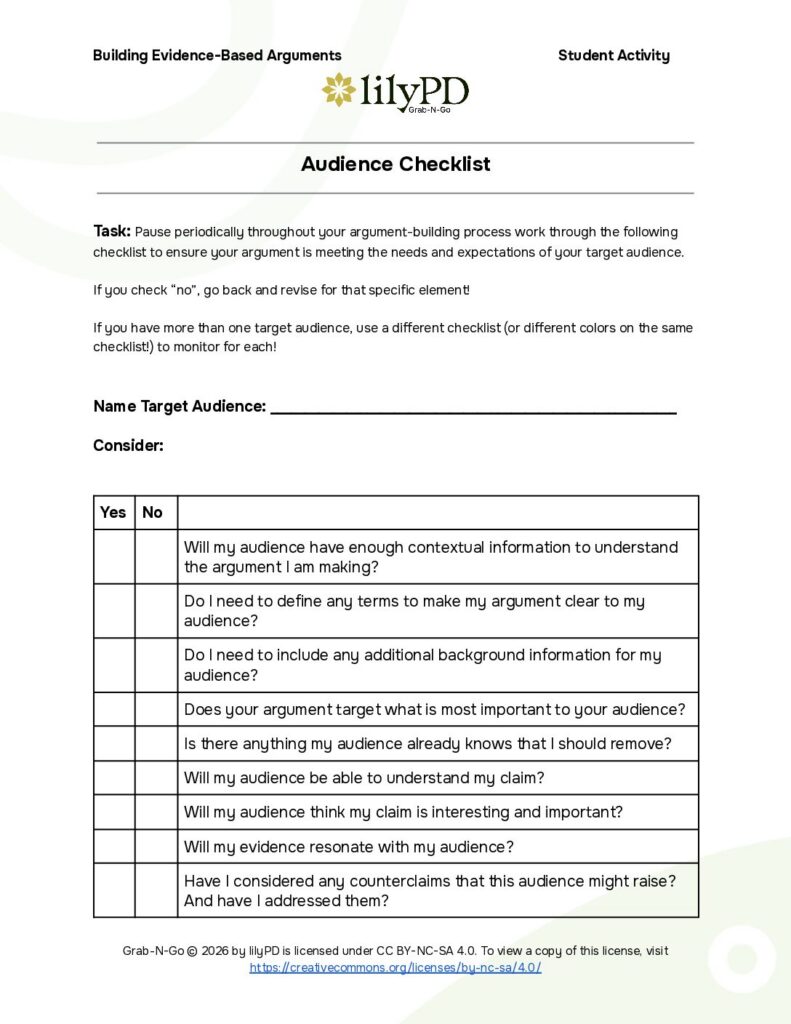
Considering Audience: Build an Audience
Course:
Building Evidence Based Arguments
Student Activity
4-12
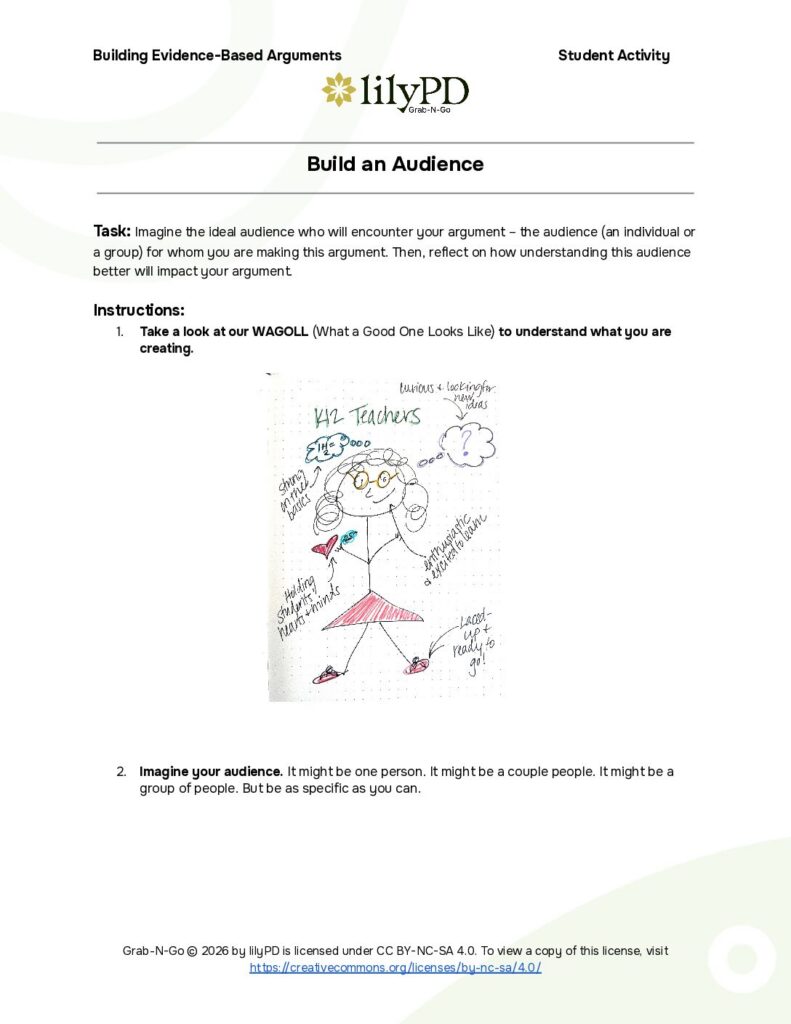
Contextualization Activity: Reading Around a Topic
Course:
Building Evidence Based Arguments
Student Activity
9-12
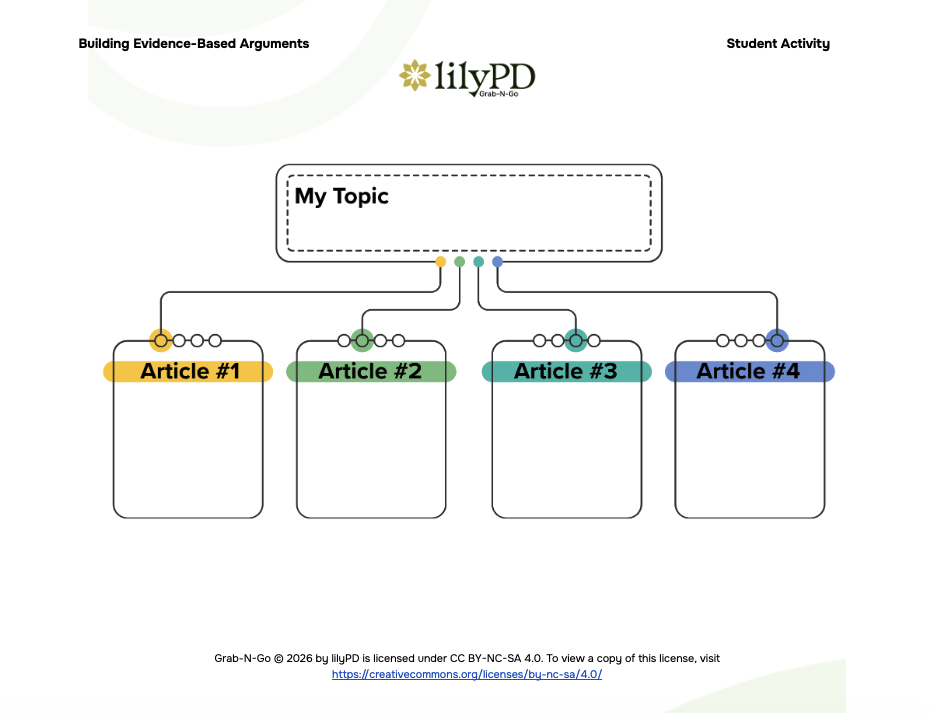
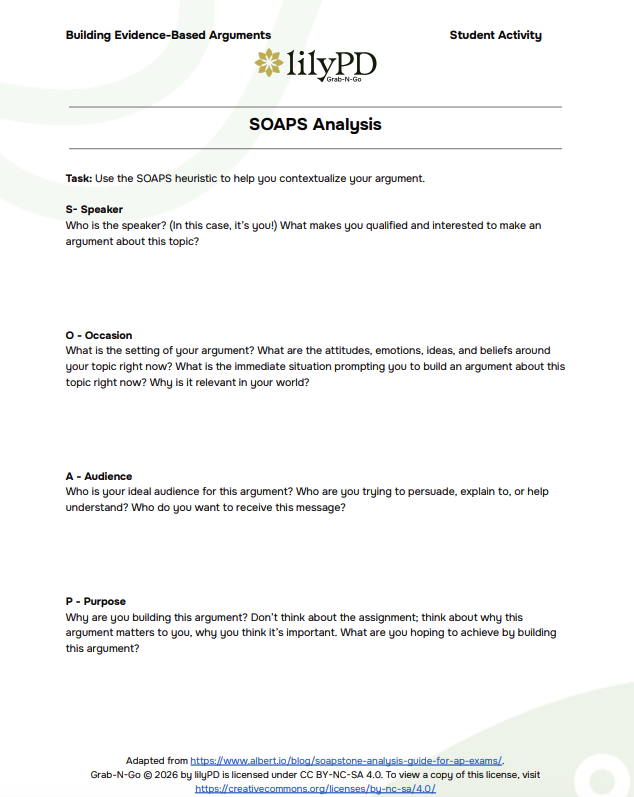
Contextualization Activity: SOAPs Analysis
Course:
Building Evidence Based Arguments
Student Activity
6-12
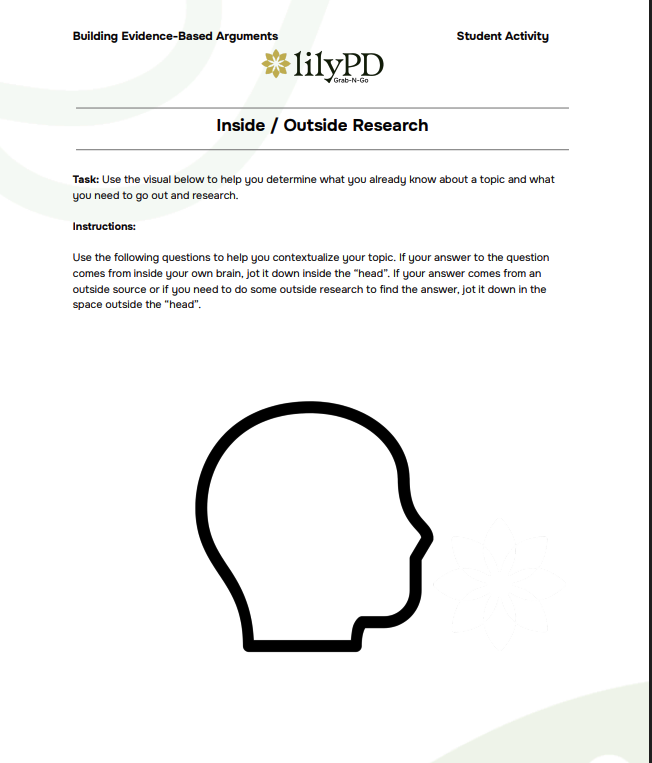
Contextualization Activity: Inside / Outside Research
Course:
Building Evidence Based Arguments
Student Activity
4-12
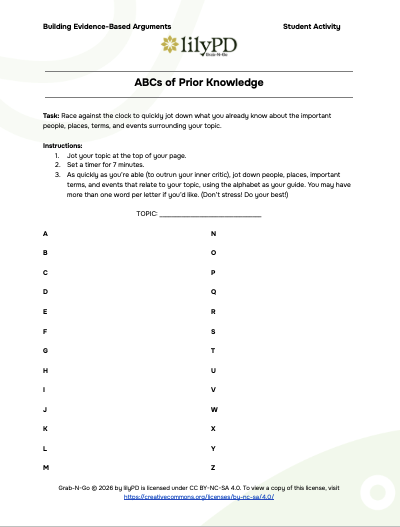
Contextualization Activity: ABCs of Prior Knowledge
Course:
Building Evidence Based Arguments
Student Activity
4-12
Primary Source Analysis Strategy: DEEP Context
Course:
Nonfiction Reading Strategies
Student Activity
6-12
Literacy Strategy: Most Important Sentence
Course:
Nonfiction Reading Strategies
Teaching Guide
6-12
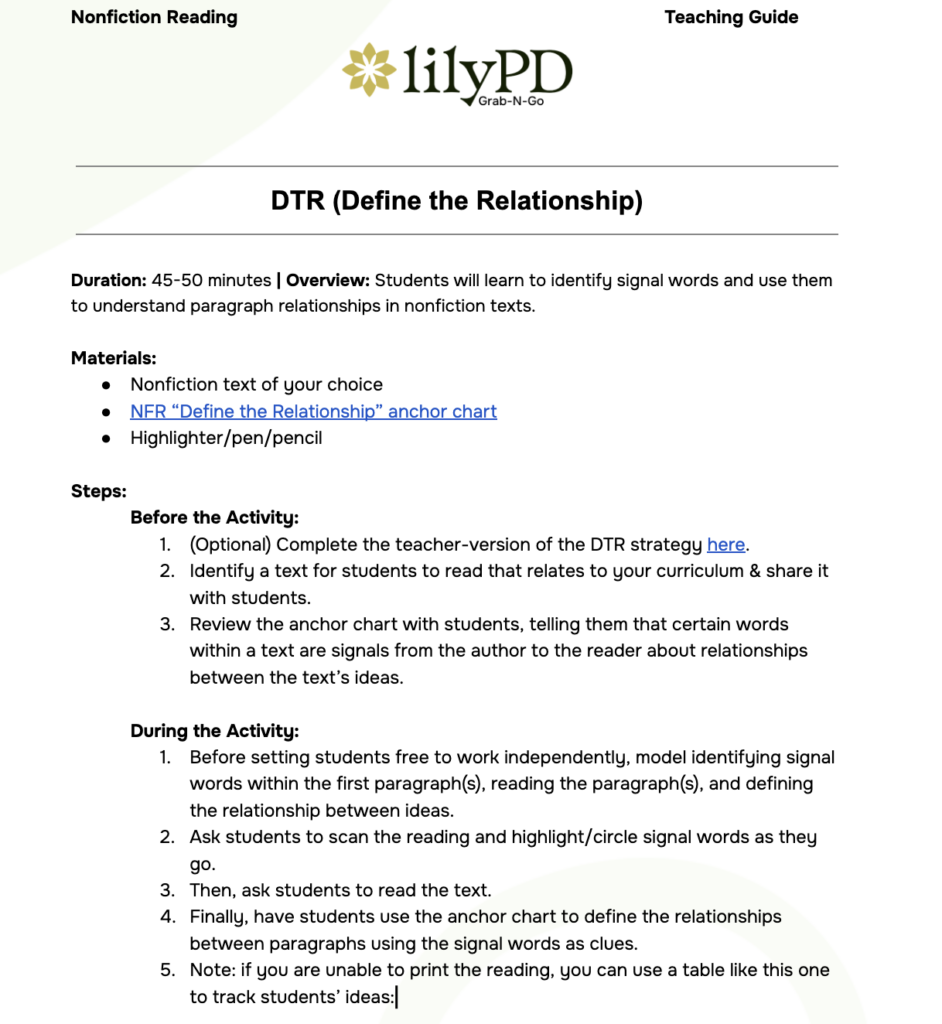
Literacy Strategy: Define the Relationship
Course:
Nonfiction Reading Strategies
Teaching Guide
6-12
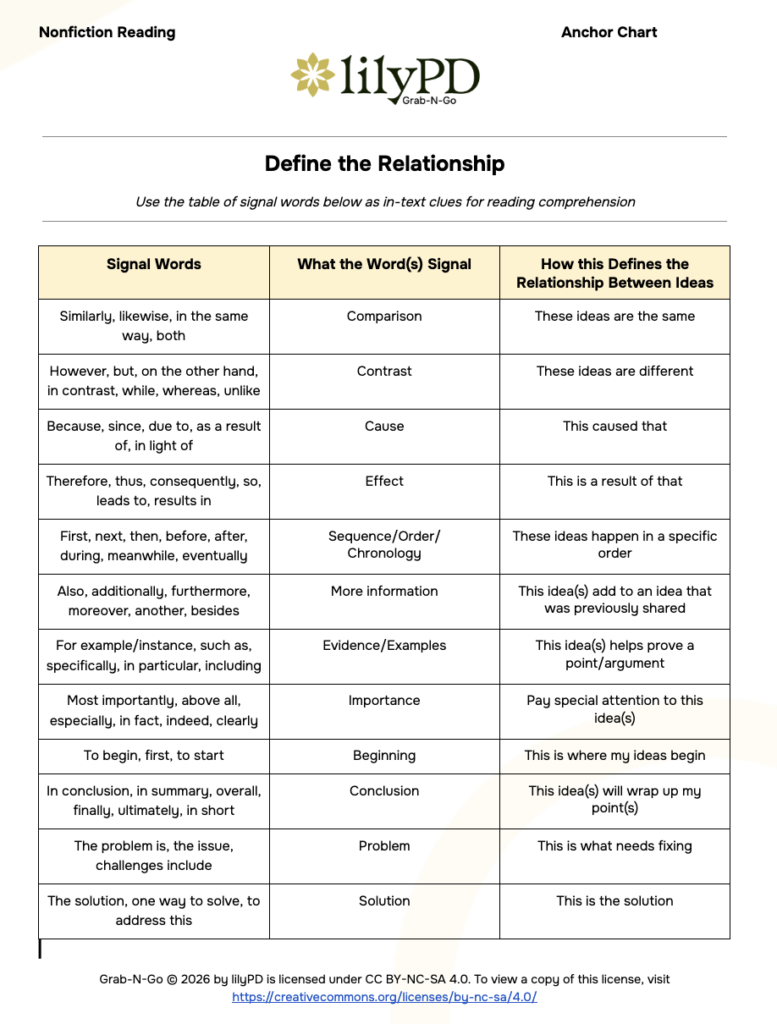
Types & Purposes of Nonfiction in Social Studies
Course:
Nonfiction Reading Strategies
Anchor Chart
6-12
Literacy Strategy: Use Text Structure Clues
Course:
Nonfiction Reading Strategies
Teaching Guide
6-12
Literacy Strategy:Use Text Structure Clues
Course:
Nonfiction Reading Strategies
Student Activity
6-12
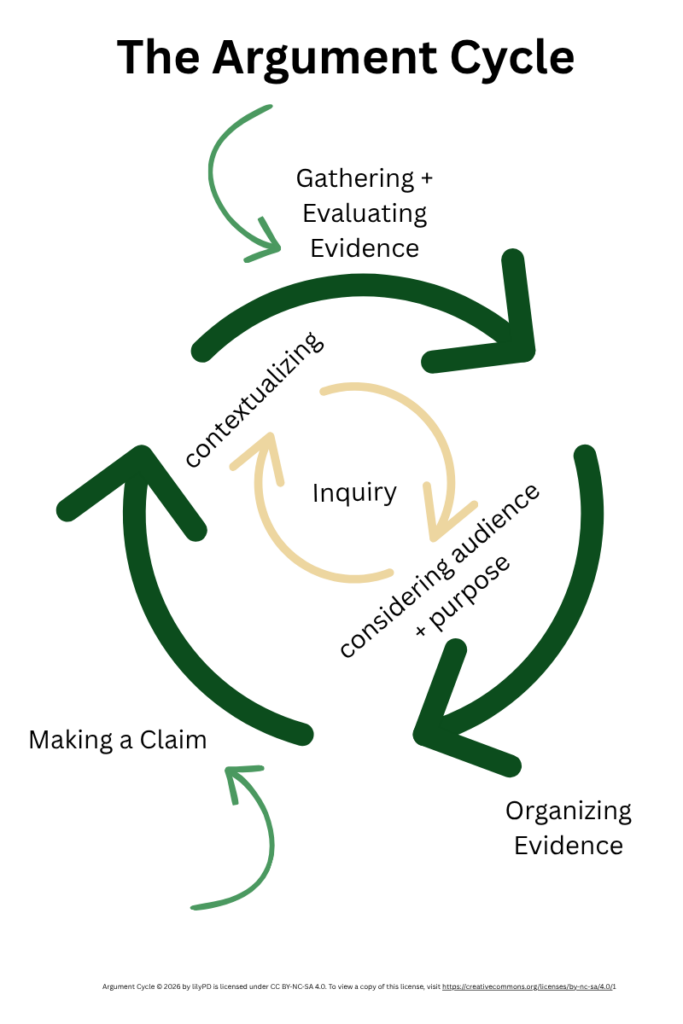
Building Evidence Based Arguments
Argumentation is a science and an art that hinges on evidence. Evidence makes or breaks an argument, but for many students, knowing when or how to use evidence doesn't come naturally. We can't expect them to just figure it out. This course gives you a toolkit of carefully curated classroom strategies that teach students to build logical, sequenced, evidence-based arguments from the ground up– equipping them with transferable skills for better essays, projects, and discussions, and clearer thinking, and stronger arguments for life.

In partnership with
William & Mary
4-12
5
5hrs

Nonfiction Reading Strategies
Pull back the curtain on the reading process by equipping your students with a permanent toolbox of practical strategies to navigate any text with purpose, confidence, and clarity. By turning invisible mental work into visible, repeatable routines, you will empower your students to move beyond literal retelling and start making real meaning from everything they read.
In partnership with
William & Mary
New
6-12
5
5hrs

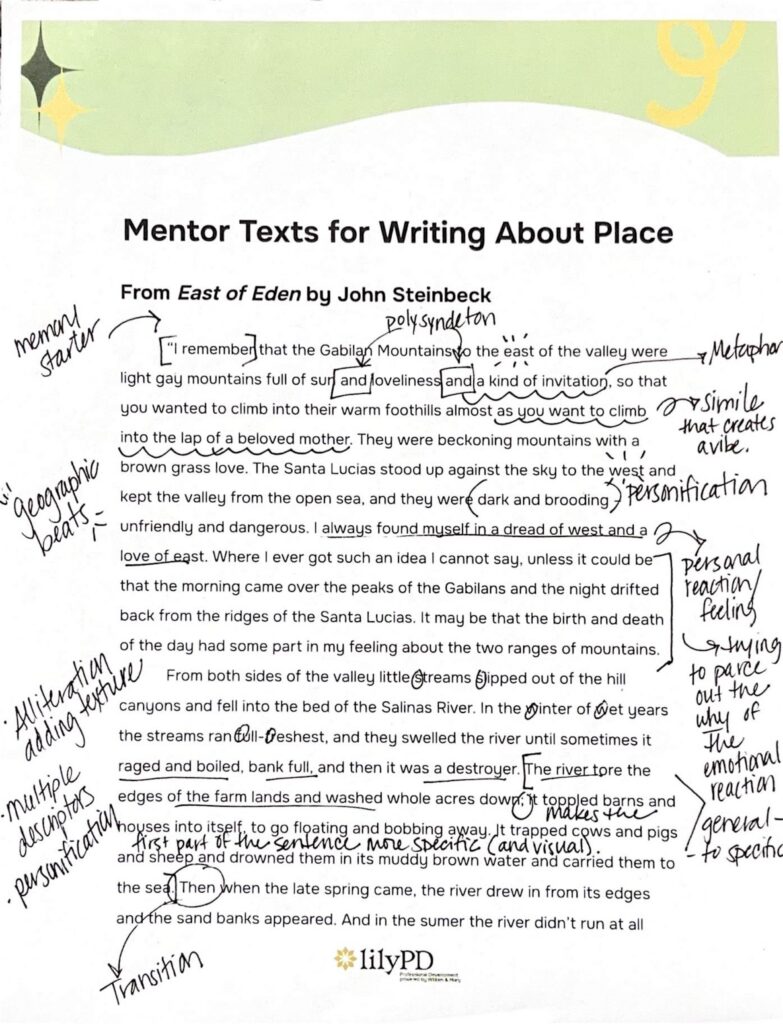
Mining Mentor Moves to Write About a Place
This is our final post in partnership with the National Writing Project’s Write Out 2026, providing new resources and materials for place-based writing with your students! You can catch up on our previous posts: Exploring the Language of Place and Engaging the Historical Imagination in Place-Based Writing. I don’t know how to write or how […]
Written By
Rebekah O’Dell
at
William & Mary
New
9-12
lilyPD community
lilyPD teacher
National Writing Project
Write Out 2026
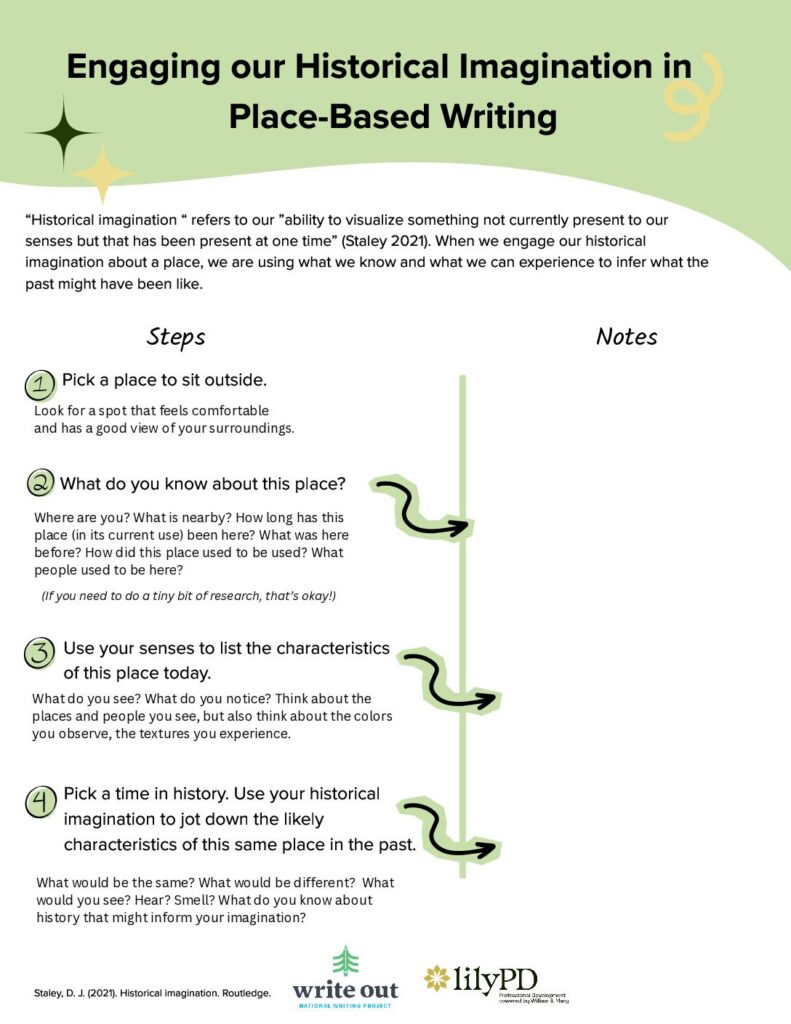
Engaging our Historical Imagination in Place-Based Writing
As part of our partnership with the National Writing Project’s Write Out 2026, we are sharing a few original resources and place-based writing activities to support student writers! You can check out our post on exploring the specific language of a place here. Ways to Use this Resource Want more resources? Check out the Write […]
Written By
Rebekah O’Dell
at
William & Mary
4-12
lilyPD teacher
National Writing Project
teaching takeaway
Write Out 2026
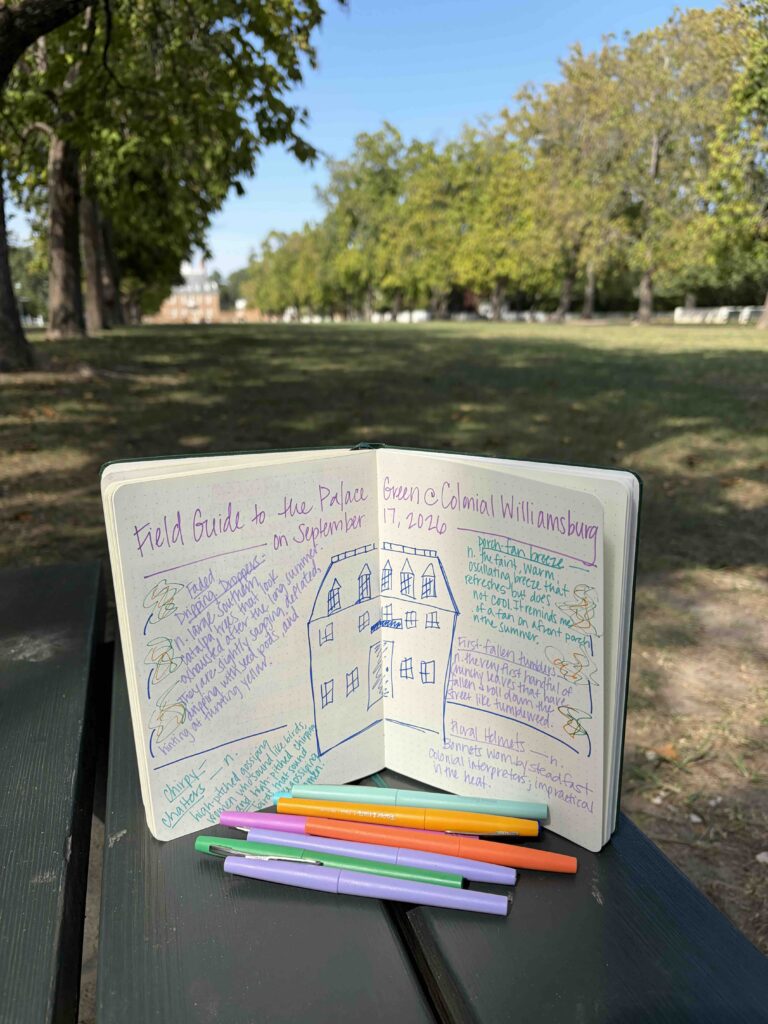
Exploring the Language of Place
lilyPD professional development powered by William & Mary is excited to be a partner of the National Writing Project’s Write Out 2026! This annual partnership between the National Writing Project and the National Park Service encourages people to get outside and write! As we celebrate this year’s Write Out (October 11 – 25), we’ll be […]
Written By
Rebekah O’Dell
at
William & Mary
K-12
lilyPD teacher
National Writing Project
Write Out 2026

Teaching Takeaway: Using Numbers as a Launchpad for Reading Comprehension
In Reading Nonfiction: Notice and Note Stances, Signposts, and Strategies, researchers Kylene Beers and Bob Probst present five signposts — moments in a text that act like a flashing neon sign to the reader saying, “Slow down! Pay attention! Something important is happening!” One of these five most important signals in nonfiction is “numbers and […]
Written By
Rebekah O’Dell
at
William & Mary
4-12
content literacy
exhibits in the classroom
lilyPD teacher
literacy strategy
teaching takeaway
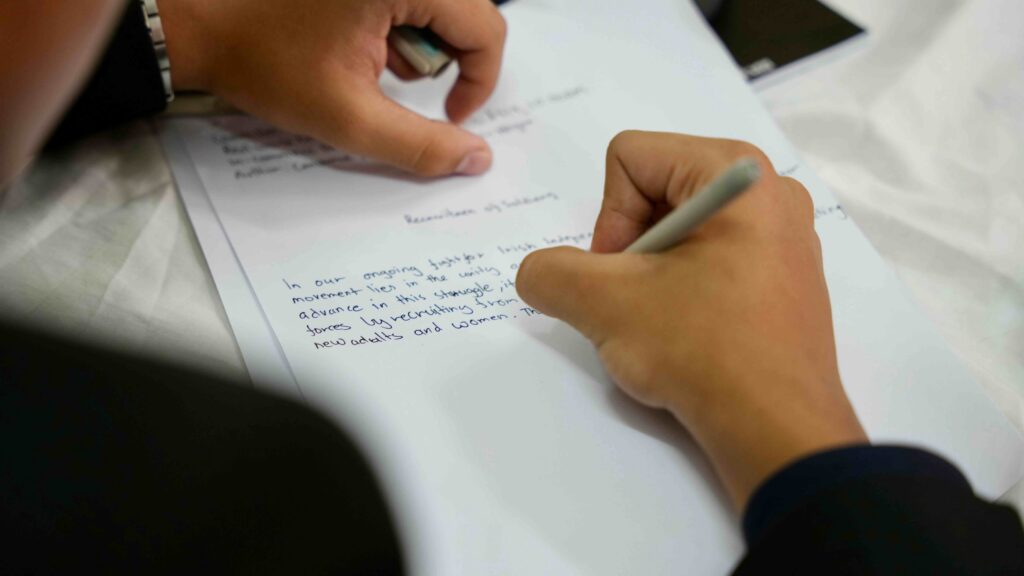
Strategy Spotlight: Silent Round Tables
Today’s Strategy Spotlight, Silent Round Tables, comes from our microcourse Civil Discourse in the Classroom, which introduces educators to a research-backed framework for facilitating productive, respectful dialogue in classrooms of all levels. You can enroll in the course here or browse our library of related resources! The Challenge We all want our classrooms to buzz […]
Written By
Rebekah O’Dell
at
William & Mary
New
Civil Discourse in the Classroom
lilyPD
strategy spotlight
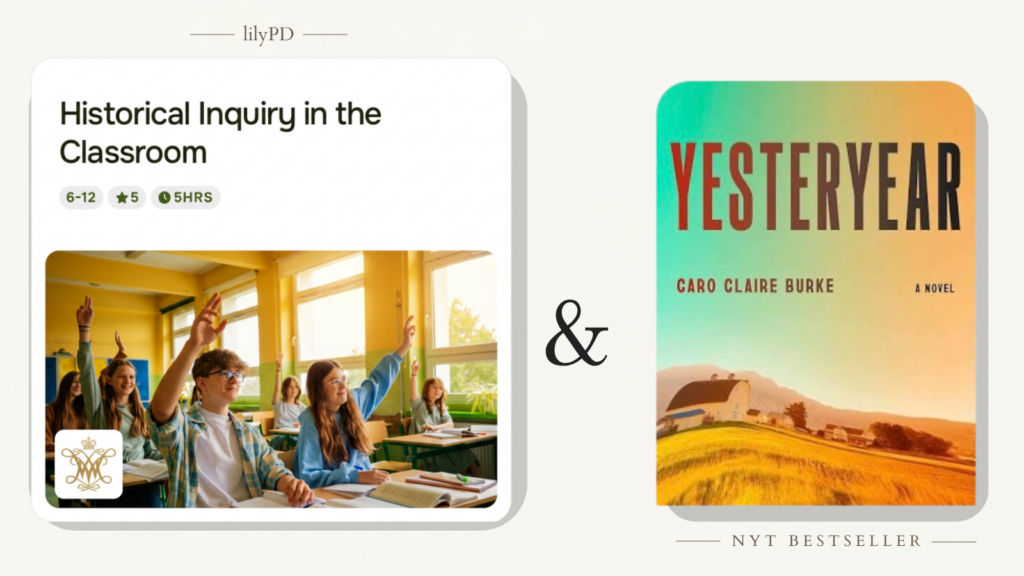
If lilyPD Courses Were New York Times Bestsellers…
Every school year, I save a million tasks (house projects, doctor’s appointments, car maintenance, large-scale clean-outs of overloaded closets) and designate them as Problems for My Summer Self. I can’t possibly manage these tasks during the sprint of the school year. But in the summer, I know it will get done. Mostly, this is delusional. […]
Written By
Rebekah O’Dell
at
William & Mary
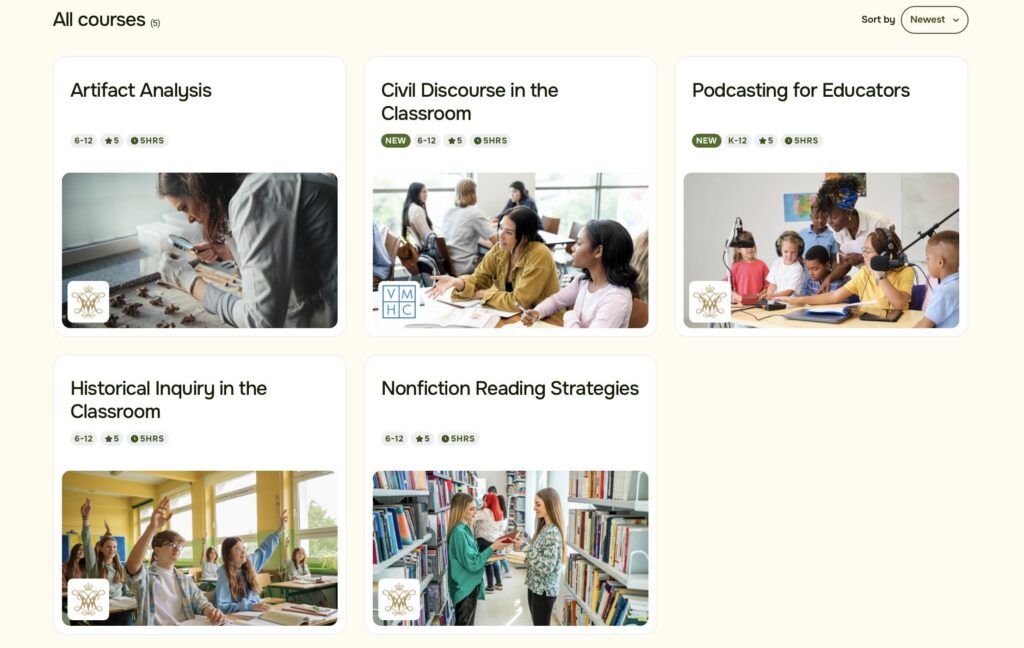
Artifact Analysis
Civil Discourse in the Classroom
Historical Inquiry in the Classroom
lilyPD
microcourse
Nonfiction Reading Strategies
Podcasting for Educators
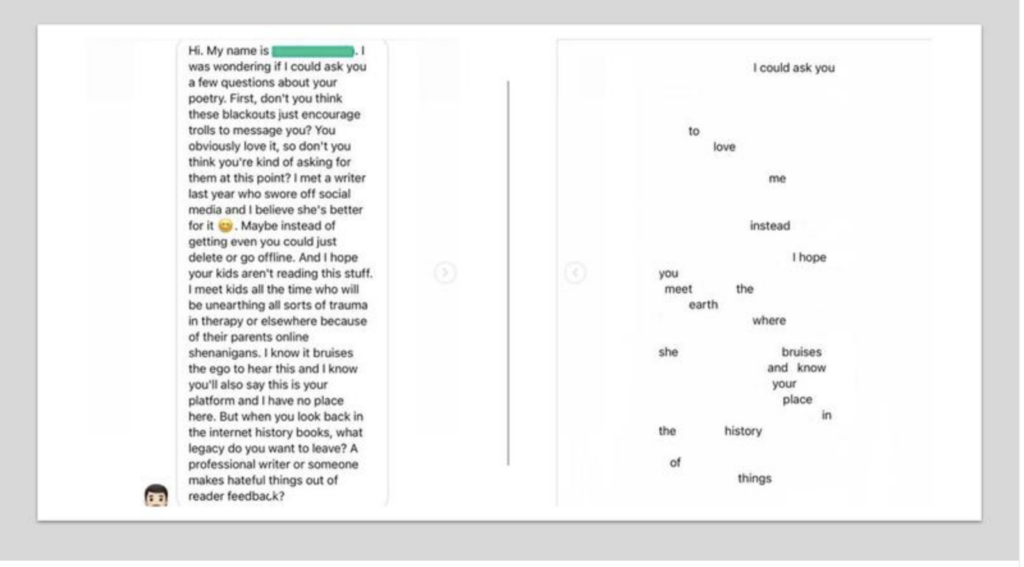
Teaching Takeaway: Found Poems for Higher-Order Thinking
Poet Kate Baer has made a game of taking online hate-mail and transforming it into erasure poetry, a type of found poem. In a found poem, a writer takes key words from another text, arranges and rearranges them, and creates a completely new, original work. In her erasure poems, Baer takes something meant to attack […]
Written By
Rebekah O’Dell
at
William & Mary
content literacy
free resource
Literacy
microcourse
primary source analysis
teaching takeaway
3 Ways to Use lilyPD to Super-Charge Your Summer Learning
Let’s be honest: you need a break this summer. A true break. Time to sleep in, read a silly book, and soak up the long, slow evenings. You have had a school year that I bet was both challenging and rewarding. You have earned some rest. But time away can also be clarifying; it helps […]
Written By
Rebekah O’Dell
at
William & Mary
New
lilyPD community
lilyPD teacher
Professional Learning

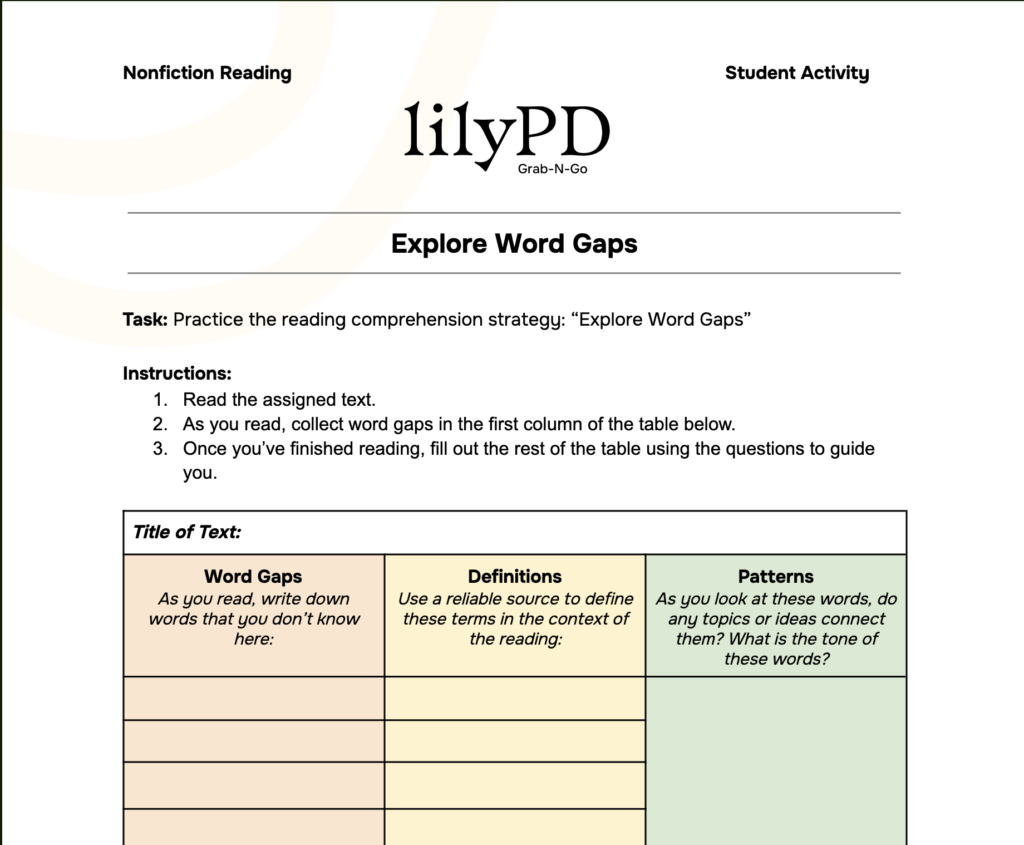
Explore Word Gaps for an Instant Reading Comprehension Boost
A “word gap” is a word or phrase that a student doesn’t know (Beers and Probst, 2015). A word gap might represent a brand new word the student has never seen before or a word they can understand from context but can’t define. The Collect and Explore Word Gaps strategy asks students to bring together the word gaps they find in a text and then explore them. This strategy is about more than simply learning new language, though. Collecting and exploring not only these individual words but the patterns they form can also help readers understand the big ideas of a text.
Written By
Rebekah O’Dell
at
William & Mary
K-12
content literacy
Literacy
strategy spotlight
Interested in creating courses & resources that bring joy?
We’re looking for partners who can develop content that continues to push what professional development can be for our teachers.
Discover More Instructors

Allison O’Connor
4 Contributions

Amelia Bochain
14 Contributions

Conor Molloy
3 Contributions

Dr. Ali Blankinship
2 Contributions

Dr. Derek Porter
10 Contributions

Guest Writer
1 Contribution

lilyPD
30 Contributions

Sam Futrell
48 Contributions