
Every school year, I save a million tasks (house projects, doctor’s appointments, car maintenance, large-scale clean-outs of overloaded closets) and designate them as Problems for My Summer Self. I can’t possibly manage these tasks during the sprint of the school year. But in the summer, I know it will get done.
Mostly, this is delusional.
The degree of my delusion can be measured each summer by the number of summer reading lists I consume (I even pay for some!) – as if, over the summer, I will have the capacity to read fifty books on top of the TBR of hundreds I’m already searching for time to enjoy.
But I do love them. A summer reading list is the end-of-school equivalent of new school supplies in August. Everything is possible; everything is promised.
We’d like to offer a different sort of summer reading list to inspire both your reading and your summer learning with lilyPD. We’ve matched lilyPD courses to a current New York Times bestseller in order to fill your aspirational summer reading lists, introduce you to the vibe of each course, and pique your interest in taking one!
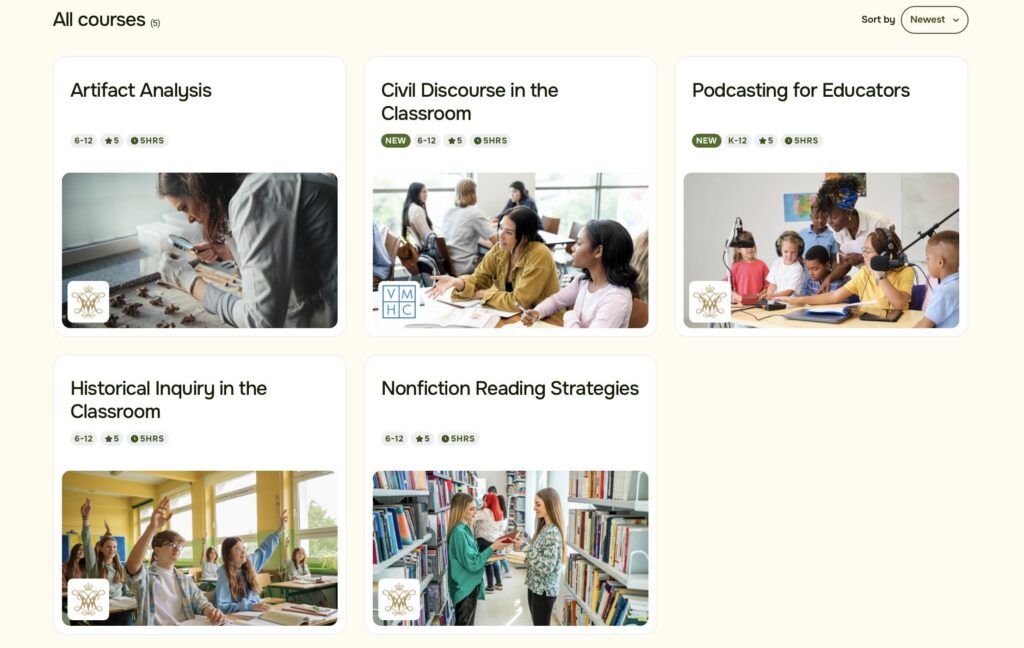
Historical Inquiry in the Classroom as Yesteryear by Caro Claire Burke
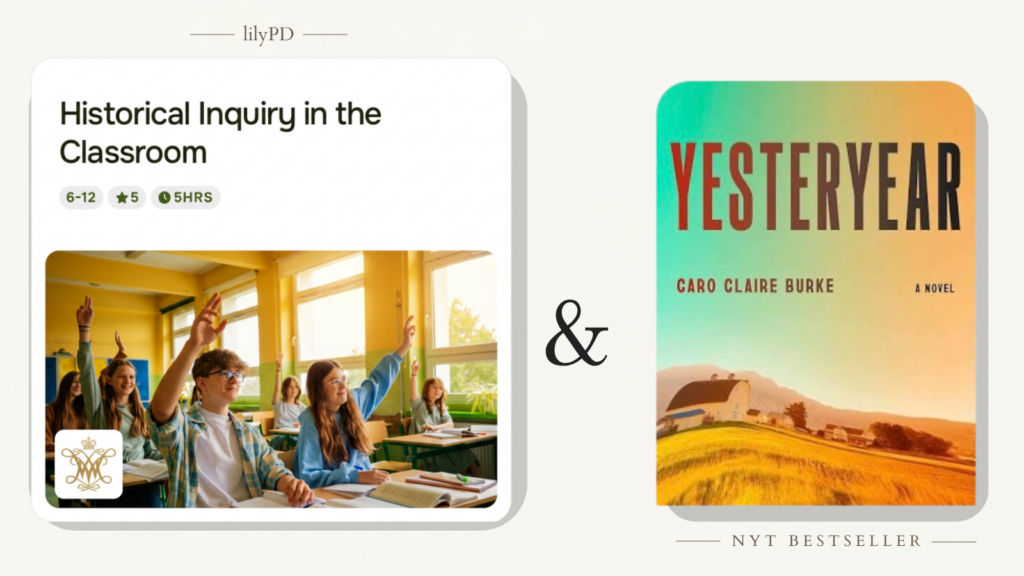
The central question: What do we do with the past? Do we challenge it and learn from it? Do we do things differently than our ancestors did? Do we worship it, sanitize it, and wash it in nostalgia? Is there a middle way that admires its virtues while acknowledging its shortcomings?
Yesteryear by Caro Claire Burke
In Yesteryear, Natalie is a “trad wife” influencer who has created a following (and made a living) on harkening back to the romance of the pioneer life of the 1850s. Of course, it’s not real – her family is very much living a contemporary life. But the image she has cultivated rests on a wistful, sugar-coated image of the way things used to be. One morning, Natalie wakes up in 1855 and is now forced to ask more nuanced questions about the way she interacts with the past.
Historical Inquiry in the Classroom
What Natalie really needs is a mindset of historical inquiry – a curiosity about the past with the purpose of learning. It’s a mindset that we can teach our students through well-designed teacher-led and student-led inquiry experiences, teaching students transferable skills and course content at the same time.
Civil Discourse in the Classroom as Take Me to Your Leader by Neil deGrasse Tyson
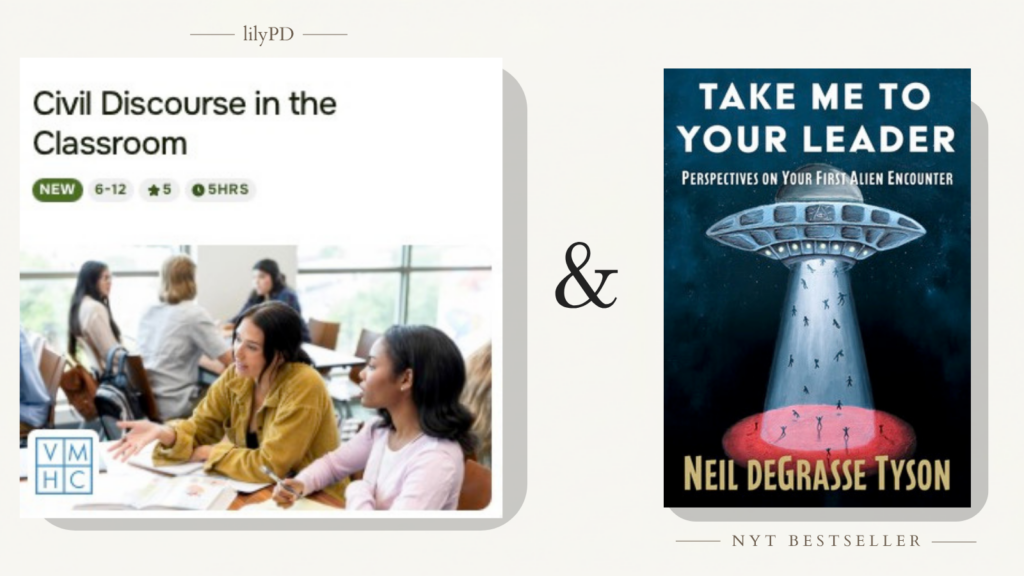
The central question: How do you have a productive exchange with someone (or something) whose entire frame of reference is different from yours?
Take Me to Your Leader by Neil deGrasse Tyson
Take Me to Your Leader takes this central question to its furthest conceivable limit: visitors from another planet. In his latest book, Tyson applies the universal laws of physics to explore what aliens might look like, how they might communicate, how they might travel to reach us, and what they might think of us upon arrival — even offering etiquette tips for a first close encounter.
Civil Discourse in the Classroom
We’re not saying your students are extraterrestrials, per se, but the idea of fostering mutually beneficial conversations amongst very different perspectives holds true. Tyson argues that first contact with alien life would fail not because aliens are incomprehensible, but because humans aren’t practiced enough at setting aside ego, fear, and assumption. Civil Discourse addresses that same deficit at the classroom scale with concrete routines, protocols, and strategies that make classroom conversations work.
Podcasting for Educators as What Can I Say? By Catherine Newman
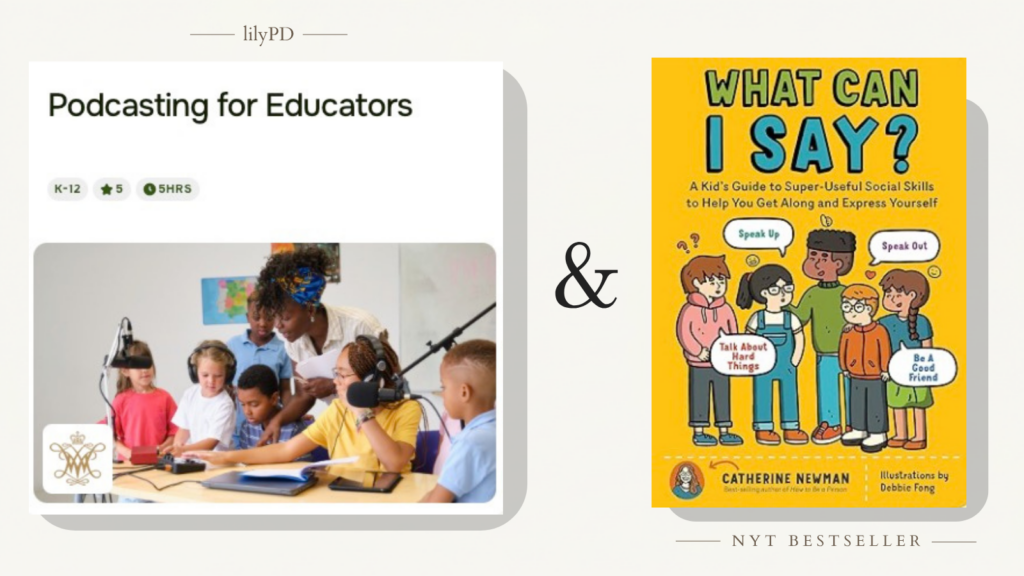
The central question: How do you say something that matters, to someone who needs to hear it, in a way they can actually receive?
What Can I Say by Catherine Newman
This middle-grade NYT Bestseller walks adolescents through a series of important relationships in their lives – friends, teachers, family members – and gives suggestions for meaningful communication, keeping both the speaker’s and the listener’s needs in mind. This book provides scripts and advice for approaching and responding to topics on a wide variety of topics, from making a new friend to responding to bullying. This would make an excellent resource for social-emotional learning in your classroom or as a gift for a well-intentioned-but-socially-anxious teen you know.
Podcasting for Educators
Podcasting for Educators shares how to bring podcasting into the classroom as a tool for inquiry, storytelling, and authentic communication. In many ways, this course addresses the same goals as Newman’s book through the podcast medium: meaningful communication. Through our microcourse, teachers learn to design podcast-based learning experiences that amplify student voice and experiences. A student who reads What Can I Say? and then learns to produce a podcast has traveled from “I don’t know how to start this conversation” all the way to “I made something for the world to hear.”
Nonfiction Reading Strategies as Atomic Habits by James Clear
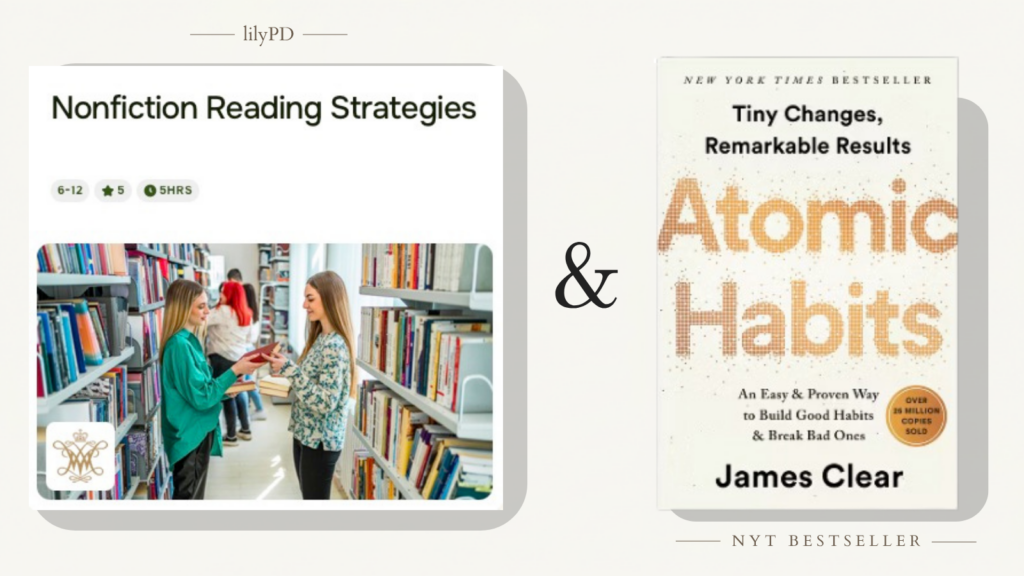
The central question: How can we create systems to beat struggle?
Atomic Habits by James Clear
The big idea of Atomic Habits is surprisingly reassuring: if you’re struggling, it’s probably not you — it’s your system. Most people fail to build new behaviors not because they’re lazy or weak, but because their environment and routines are quietly working against them. Clear’s fix is four simple laws — make it obvious, attractive, easy, and satisfying — that take the heroic effort out of change. When a habit is well-designed, it starts to run on autopilot. The struggle fades not because you got tougher, but because your system got smarter.
Nonfiction Reading Strategies
Nonfiction Reading Strategies is also rooted in good news: students usually don’t struggle with reading because they can’t read — they struggle because they don’t know how to approach a complex text. Once you see it that way, the fix becomes clear: give students practical, research-backed strategies to build repeatable routines they can take into any subject area. Just like Atomic Habits, the goal is to become independent and ditch the systems. It’s habit stacking, teacher-style. The goal is students who can navigate nonfiction texts with purpose, confidence, and clarity — all on their own.
Artifact Analysis as Theo of Golden by Allen Levi
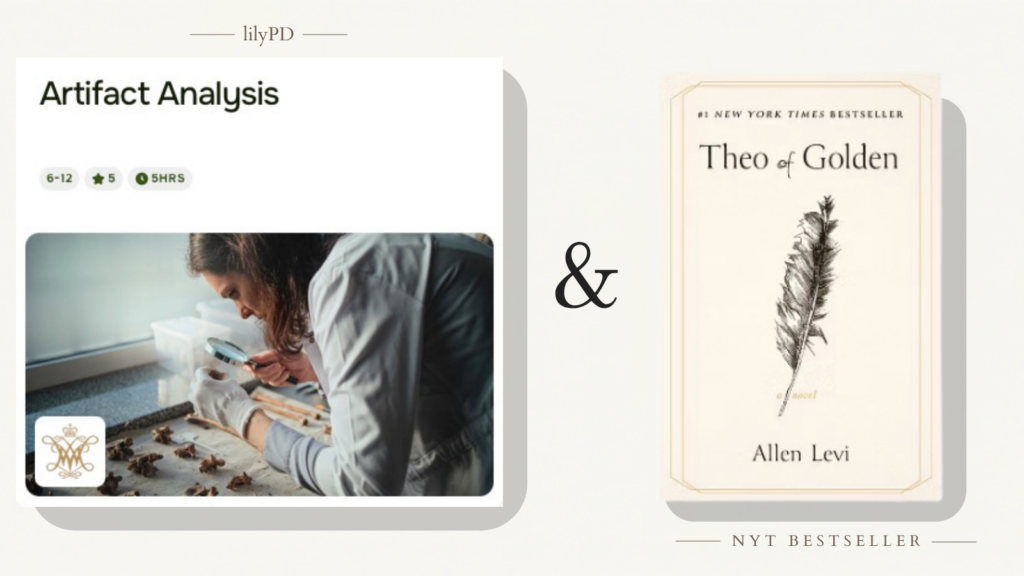
The central question: What stories do objects hold?
Theo of Golden by Allen Levi
In Theo of Golden, pencil portraits hanging on a coffeehouse wall become the novel’s central artifact — each one a quiet reminder of a person’s life. Theo’s act of purchasing each portrait and returning it to its subject is the novel’s argument in action: objects hold stories, but those stories only surface when someone slows down and asks to hear them. Each exchange unlocks not just a personal history but an invisible thread of connection, revealing that the stories objects hold are never just about the past — they’re about what binds people to one another right now.
Artifact Analysis
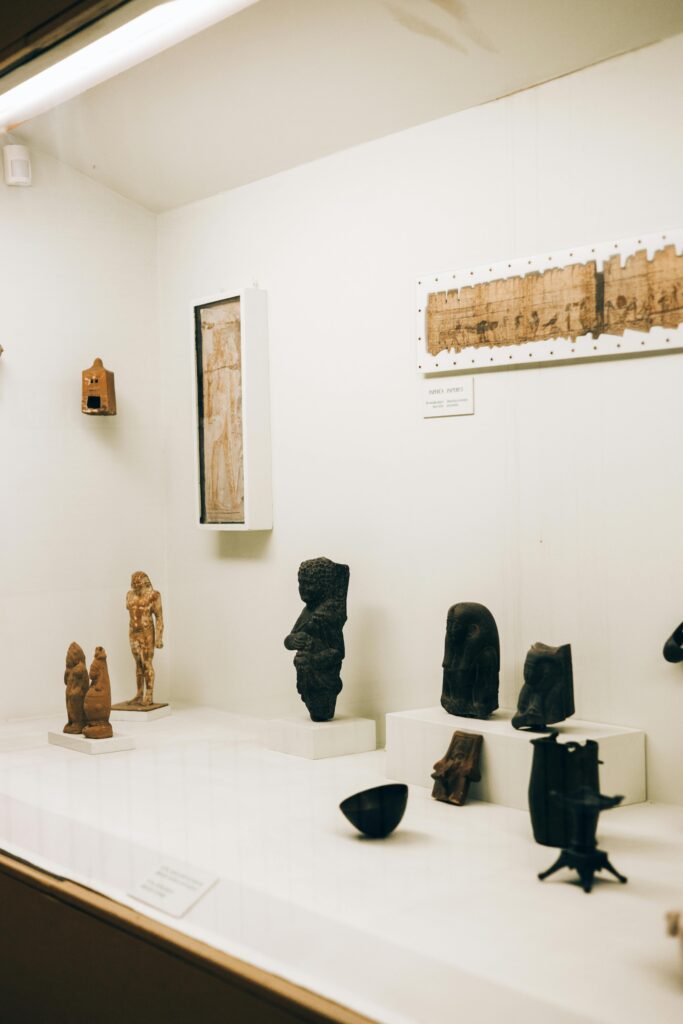
The course opens with a reframe that changes everything: artifacts aren’t static touchstones of the past — they’re evidence to be questioned, interpreted, and debated, and they are powerful entry points into historical thinking. Rather than telling students what an object means, teachers are trained to design structured observation and inquiry experiences that let students generate and refine their own historical claims. The stories objects hold, in this framework, aren’t fixed — they depend on who is looking, what questions they ask, and what context they bring. An object’s story, just like a person’s, is never just one story — it’s a layered, contested, living thing that changes when a new student picks it up and looks.
What course are you most drawn to? Where might you start on lilyPD? And have you added any books to your to-be-read list? We’re dying to know! Leave us a comment to join the conversation!


Leave a Reply