
Today’s Strategy Spotlight, Silent Round Tables, comes from our microcourse Civil Discourse in the Classroom, which introduces educators to a research-backed framework for facilitating productive, respectful dialogue in classrooms of all levels. You can enroll in the course here or browse our library of related resources!

The Challenge
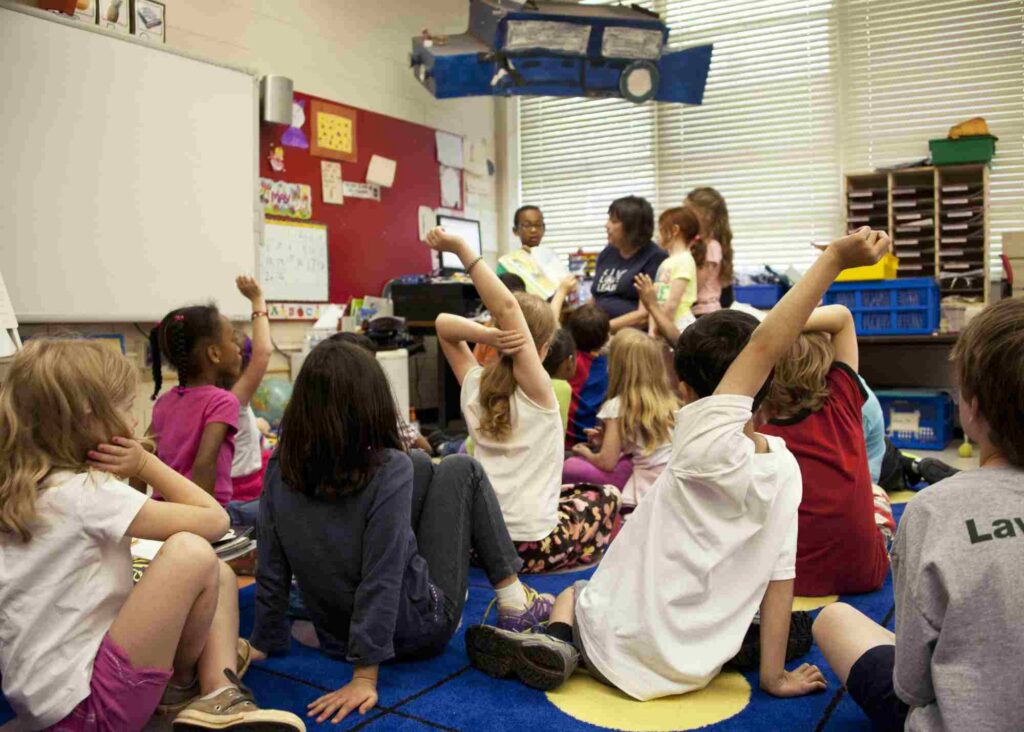
We all want our classrooms to buzz with the energy of productive, respectful, meaningful discussions. But we occasionally find ourselves in situations where the topic of conversation or the classroom dynamics themselves require an alternative – something a little bit slower, a little more thoughtful.
The Solution
Silent Round Table discussions give a written voice to every single student in the room. It invites every student to develop an inquiry question for discussion and respond to the inquiry questions of their peers.
This can be the right civil discourse strategy for controversial, hot-button topics that benefit from deep breaths, carefully-considered word choice, and a slower discussion pace. It also works well when your classroom dynamics just need a reset – when you have some students who are very hesitant to verbally participate or when everyone simply needs a break from the frenetic hubbub of school life.
The other benefit of the Silent Round Table is that there is an immediate, tangible record of the discussion. While these records help us as teachers assess students’ understanding and topics to which we might need to return as a whole group, they can also be uploaded to your school’s LMS and shared with students, helping with essays, test review, and more.
The Strategy
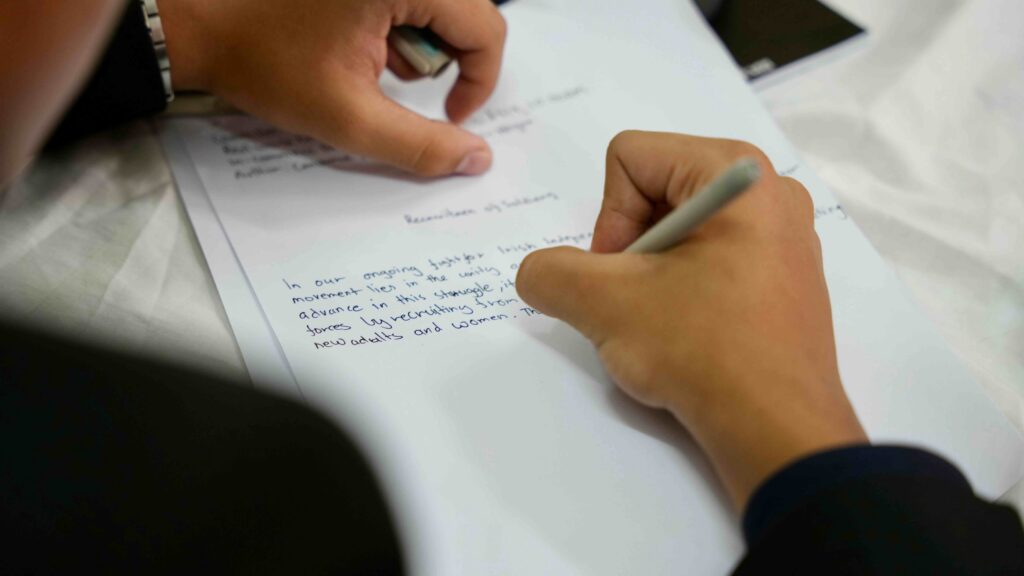
- Students develop questions: Each student will write their discussion question at the top of a blank piece of paper and submit it to the teacher for review.
- Redistribute the questions: Then, the teacher will redistribute the questions. Students have one minute to read and think about the question and one minute to write a brief response or add onto someone else’s comment.
- Everyone responds: Students pass the papers around the class until everyone has responded to every question.
Tips & Tricks
- Display the timer on the board for everyone to see.
- Encourage students to reference the text or even look up information, if they are able to do so quickly.
- Remind students that what they write should be concise, and should still follow civil discourse guidelines.
- Save five minutes at the end of class, and ask students to share what question or comment stood out most to them and why.
Next Steps for Getting Started
Silent Round Table is an easy alternative to an out-loud, traditional conversation. Here are some ways to move this learning forward into your classroom.
- Try the strategy with your students.
Silent Round Tables are liberating for some students and frustrating for others. (The slower, more methodical pace feels uncomfortable for students who are passionate verbal participants in other conversations.) However, all students benefit from trying different modes of discourse. So, go ahead! Give it a shot! Start with a small, safe topic first and see what happens. Ask your students for feedback, too, to gauge what worked well and what was challenging for them!
- Take it to your colleagues.
Share this strategy over lunch with your colleagues or in a department meeting. Talk it out and see what they think. Have they tried this before? What are some advantages and disadvantages you can anticipate? Will anyone try this alongside you? (I always feel bravest trying a new strategy if the teacher-next-door agrees to try it, too.) Make a plan for trying this strategy and then meet up to debrief.
- Learn more about civil discourse.
If Silent Round Tables has you itching to learn more about civil discourse and strategies for promoting it in your classroom, enroll in the lilyPD Civil Discourse in the Classroom microcourse! It’s free! Over the course of about five hours, you’ll gain skills in facilitating civil discourse among your students, get access to 18 downloadable resources, and learn routines and strategies to make these conversations a regular part of your classroom life.
How might you incorporate silent round tables into your classroom practice? What could this strategy make possible for you and for your students? Leave us a comment!









Log in to leave a comment