
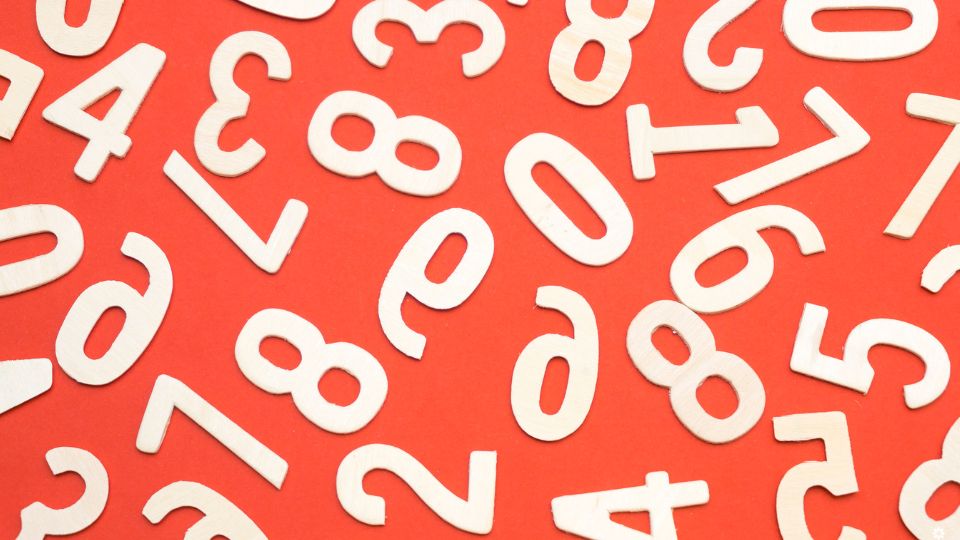
In Reading Nonfiction: Notice and Note Stances, Signposts, and Strategies, researchers Kylene Beers and Bob Probst present five signposts — moments in a text that act like a flashing neon sign to the reader saying, “Slow down! Pay attention! Something important is happening!”
One of these five most important signals in nonfiction is “numbers and stats”.
Great minds think alike.
Sam Futrell and Maggie Creech also emphasize the significance of numbers in their course Exhibits in the Classroom. Check out this resource:
The Resource
How We Use It
In Exhibits in the Classroom, Sam and Maggie use this as one strategy to help students make meaning as they study museum exhibits.
The magic here is that honing in on numbers gives students something to actively do as they read and peruse an exhibit — or any text! They are easy-to-find visual cues that something meaningful is happening. But those numbers have meaning. Taking an extra beat and considering what the numbers represent leads students to deeper comprehension.
Resource Remix
In the course, students use the resource above to track numbers inside a museum exhibit and then consider what they represent and why it matters. Here are a few ways we can use it in different contexts!
Extend It
Most Important Number
After students have completed the graphic organizer, host a light class debate. Ask students to share their numbers in small groups and then, as a group, choose the most important number and defend it. Students could jot it on the white board, share it verbally in a whole-class discussion, or simply submit their rationale as an exit ticket.
Tell a (Numerical) Story
After examining the numbers in the text, ask students to think only about the numbers presented. Ask: What story do just these numbers tell? Then, go back to the text. How was the “number story” incomplete? What does the “number story” reveal that might be otherwise missed in reading the text?
Remix It
The brilliance of this strategy is how transferable it is. You can use it again and again with any text. And the more students practice it, the more automatic this thinking will become!
Use it with multimedia texts (like documentaries or podcasts)
I’m always looking for ways to focus students and hold them accountability while we are watching a film or listening to a podcast. This can be used as a focus strategy that doubles down on comprehension!
Use it for ANY nonfiction text.
While Sam and Maggie use it to help students understand a museum exhibit more deeply, this strategy can go to English, social studies, or science class and support the reading of any and all nonfiction texts.
If a nonfiction text lacks numbers, it’s a great time to pause and ask, “Why?”
Add it to a Choose-Your-Own-Strategy Wall
We want students to eventually reach for comprehension strategies on their own when they need them — eventually leading to complete independence. Make a wall of strategies students can use whenever they need them. Rather than prescribing this single strategy for everyone, let it be an option students can select when it serves them. As an exit ticket, ask them, “Which strategy did you use today? How did it help you?”
Want more?
- Our incredible resource library has 175+ classroom-ready resources! Check it out and find other resources to weave into your classroom routines!
- Take a course! lilyPD has seven courses and counting full of expert teaching advice and adaptable strategies for your classroom, including Exhibits in the Classroom!
We’d love to hear from you! How might you use Note the Numbers? If you’ve tried it, how did it go?





Log in to leave a comment