Your learning journey
About this course
Project-based learning (PBL) can be time-consuming, stressful, and difficult to fit into an already packed curriculum. But it doesn’t have to be.
What if, instead of treating projects as something extra or as a culminating assignment at the end of a unit, we approached them as a way to teach disciplinary content and literacy skills while considering both students’ learning needs and teachers’ instructional realities?
Effective PBL doesn’t have to mean weeks of planning or completely overhauling your curriculum. Projects can take one class period or several weeks, and they should be designed with teachers’ instructional needs and bandwidth in mind just as much as students’ learning needs.
In this course, we’ll explore how to make project-based learning a more manageable, meaningful, and sustainable part of our everyday instruction.
First, we’ll begin by defining a project. Then, we’ll consider how to design projects around the realities of the classrooms: our teaching, our students’ needs, and our instructional capacity.
Next, we’ll explore a Project-Based Learning for Content Literacy Framework, which organizes project work into three phases:
- Phase 1: Ideation & Research
- Phase 2: Planning & Creation
- Phase 3: Publication & Assessment
Throughout the course, we’ll discover how to use professional examples of student products — what we call WAGOLLs (What a Good One Looks Like)—as instructional tools. We’ll also investigate practical strategies for helping students generate ideas, conduct research, organize information, develop claims, create authentic products, and revise their work through meaningful feedback and hear from other award winning teachers & museum educators about their work with PBL.
Finally, we’ll consider how to bring student projects to fruition through authentic publication and iterative assessment — ideally with students as partners in determining what successful work looks like.
By the end of this course, you’ll walk away with a flexible framework for PBL that works for you and your students, plus more than 15 ready-to-use resources and 5 student-facing videos (perfect for sub days!).
Come on! Let’s start a project. 🙂
Details
Includes
Shareable PD Certificate
Aligned With
Assessment Types
Course accessibility
Expert Voices in This Course
What you’ll learn
Master Core Concepts
- Explore the Project-Based Learning for Content Literacy Framework and its three phases: Ideation & Research, Planning & Creation, and Publication & Assessment.
- Examine how authentic projects can strengthen content knowledge, literacy skills, and student ownership of learning.
Develop Skills
- Identify meaningful project opportunities that align with curricular goals, student needs, and available resources.
- Explore strategies for using mentor texts (WAGOLLs), scaffolding research, supporting revision, and building community partnerships.
Apply Your Skills in Context
- Design manageable, authentic projects that integrate content literacy skills throughout the learning process.
- Develop strategies for supporting student choice, providing actionable feedback, and creating opportunities for authentic publication.
Demonstrate Your Learning
- Complete a Narrative Assessment reflecting on how you will apply the PBL for Content Literacy Framework in your educational setting.
- Leverage a diverse range of supplementary resources, templates, and classroom-ready strategies.
Skills you’ll gain
Strategies & frameworks you’ll encounter
Ready to transform your project-based learning?
Join educators building the skills to adapt project-based learning (PBL) to your teaching, students, and instructional capacity.
Modules

Here you will meet your instructor, Sam Futrell, you’ll encounter the course objectives, and the overall learner journey for incorporating project-based learning into content-area instruction. You’ll also learn how to navigate the course content.
This module outlines the core framework that divides project work into three phases: Ideation & Research, Planning & Creation, and Publication & Assessment. You will examine sample project models across subject areas while exploring how authentic projects reinforce disciplinary literacy skills.
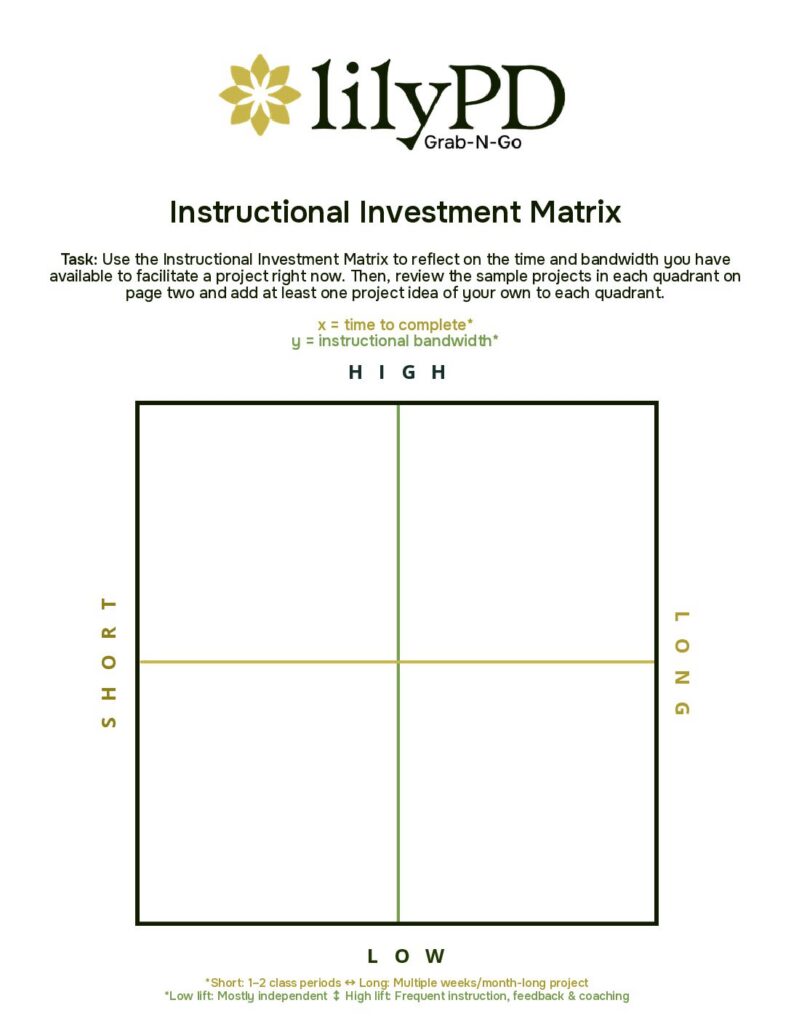
In this module you will consider your available instructional time, bandwidth, and student needs using the Instructional Investment Matrix. Here you will find practical strategies to align flexible project templates with existing curricula while addressing time and engagement challenges.
This module introduces WAGOLLs (“What a Good One Looks Like”) as exemplars that inspire creative student work without prescribing rigid formulas. Learners practice techniques for studying, scaffolding, and revisiting mentor texts across every phase of project creation.
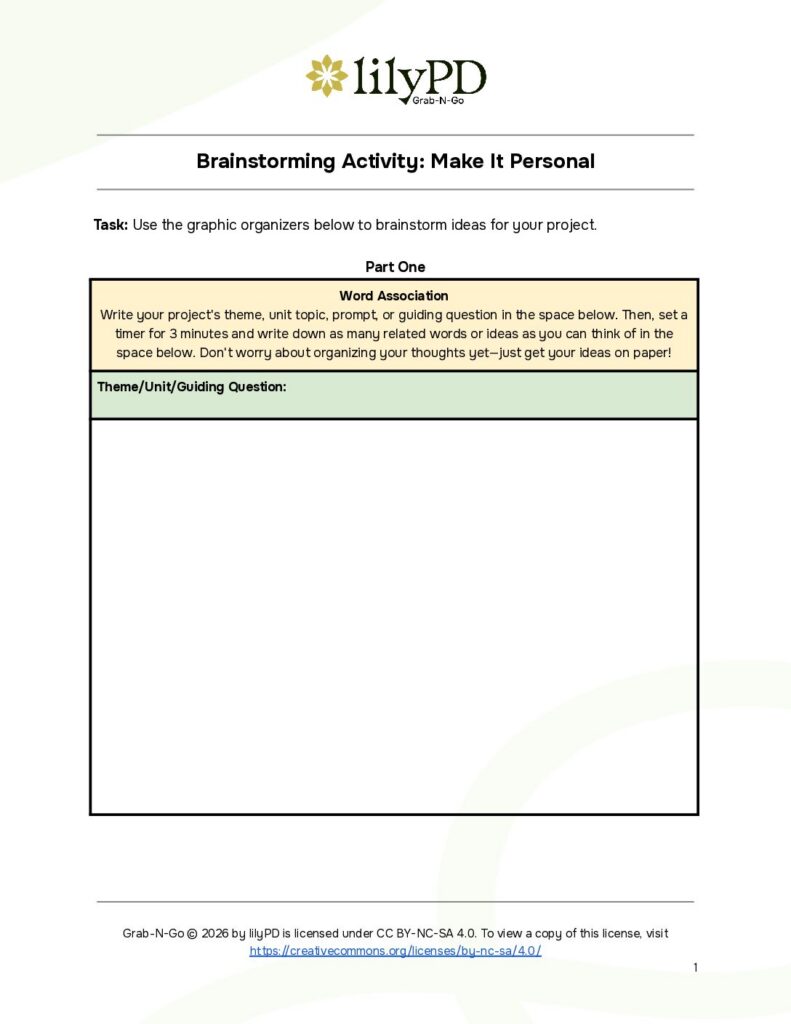
Focusing on Phase 1 of the framework, this module guides teachers in supporting student topic selection through structured brainstorming methods like “Make It Personal”. It details purpose-driven inquiry, digital research skills, and methods for selecting and evaluating evidence.
This module covers Phase 2, where educators transition into coaching roles as students map out, draft, and synthesize their projects. You will explore student-facing tools for writing claims, organizing research with mentor texts, and delivering rapid feedback.
The final module explores strategies for sharing completed student work with authentic public audiences and community partners. You will evaluate assessment best practices, including collaborative rubric design, ongoing formative feedback, and structured reflection.
Featured course resources
Course Feedback Survey
Help us improve! Please complete this anonymous survey once you have finished the course. We’d love to hear from you!
No reviews yet. Be the first to share your experience!
A microcourse is a short, focused learning experience designed to be completed in manageable segments — so you can fit professional development into your actual schedule, not just your PD days.
Course length varies, but most microcourses are designed to be completed in five hours — and you can pause and return whenever it works for you.
All courses are developed by teachers in collaboration with William & Mary faculty researchers, museum professionals, and other experts. Courses are grounded in learning science and backed by William & Mary’s decades of leadership in civic education. Content is designed to be rigorous and immediately applicable in the classroom.
We’re always adding new courses so please visit our Learn page to view the latest release.
When you complete a lilyPD course, you’ll receive a downloadable certificate worth 5 hours of professional development, accredited by William & Mary’s School of Education.
We ensure all our courses meet the Web Content Accessibility Guidelines (WCAG). This includes:
- Behind the scenes: semantic HTML, full keyboard (tab) navigation, and screen-reader compatibility.
- In the user experience: transcripts for non-text content, ALT text for images, and clear, comprehensible site navigation.
If you have concerns or suggestions for how we can improve our accessibility features, we’d love to hear from you. Please email us at lilypd@wm.edu with the subject line “Accessibility.”
Discover more courses
Continue your professional development journey with these related courses.
Historical Inquiry in the Classroom
This course provides social studies educators with the practical tools and structures needed to shift from delivering a set of information to facilitating deep, student-led investigation. You will walk away with a comprehensive plan and ready-to-use resources that make meaningful research a daily reality in your classroom, ensuring every student has the skills to analyze information and thoughtfully develop their own conclusions.

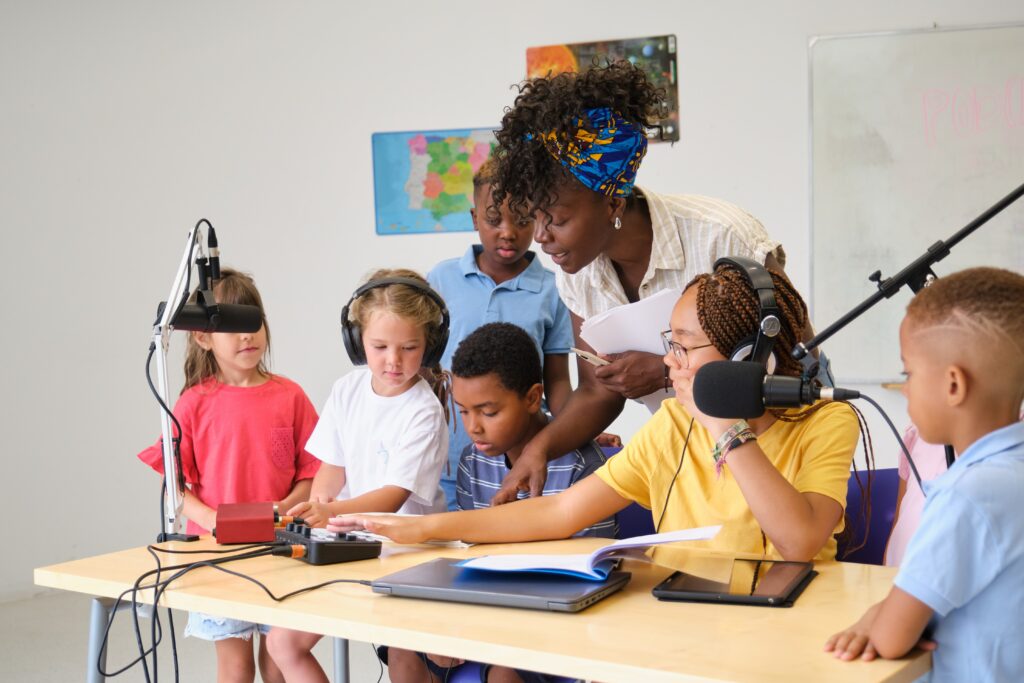
Podcasting for Educators
You don’t need to be a technical wizard to run excellent podcast projects with your students. This course covers the basics — from using podcasts to deepen learning, to guiding students through creating their own — enhancing engagement, deepening learning, and developing your students’ listening skills along the way.
Civil Discourse in the Classroom
Transform your classroom into a microcosm of democracy with this course which positions civil discourse as a foundational teaching tool, proven to enhance content knowledge and literacy skills for all students. You will develop a diverse toolkit of strategies to guide students through complex conversations with academic rigor and emotional safety. In the processes, you will equip them with lifelong skills: the ability to listen deeply, reason together, and disagree constructively and respectfully.
Nonfiction Reading Strategies
Pull back the curtain on the reading process by equipping your students with a permanent toolbox of practical strategies to navigate any text with purpose, confidence, and clarity. By turning invisible mental work into visible, repeatable routines, you will empower your students to move beyond literal retelling and start making real meaning from everything they read.

Exhibits in the Classroom
Learn how to use museum exhibits as argumentative texts that support content instruction, student-driven inquiry, and project-based learning. Whether you want to make a field trip more meaningful, strengthen students’ primary source and argument-analysis skills, or guide students as they create exhibit projects for National History Day, Exhibits in the Classroom provides practical strategies, ready-to-use resources, and real-life examples to help you bring the work of museums—and curators—into your classroom.
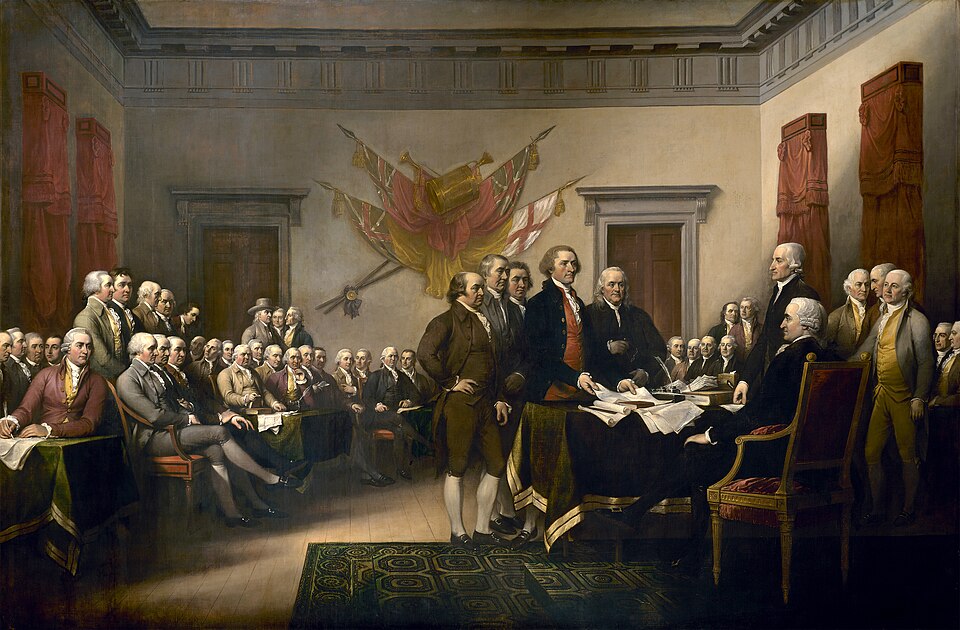
The Horizon of Independence
As the first course in our three-part series on the American Revolution, the Horizon of Independence helps educators deepen their understanding of early America and the build up to the American Revolution (1607-1776) by exploring inquiry-driven, primary source-based strategies for teaching the complexities and enduring significance of the founding of the United States of America.
Artifact Analysis
Transform your classroom into a site of active, inquiry-driven discovery with this course on artifact analysis. Use artifacts as dynamic evidence that empowers students to question, interpret, and debate history. Through a focus on culturally responsive teaching and practical sourcing—including museum digital collections and 3D printing—you will gain the tools to make history feel tangible and engaging for every learner.