
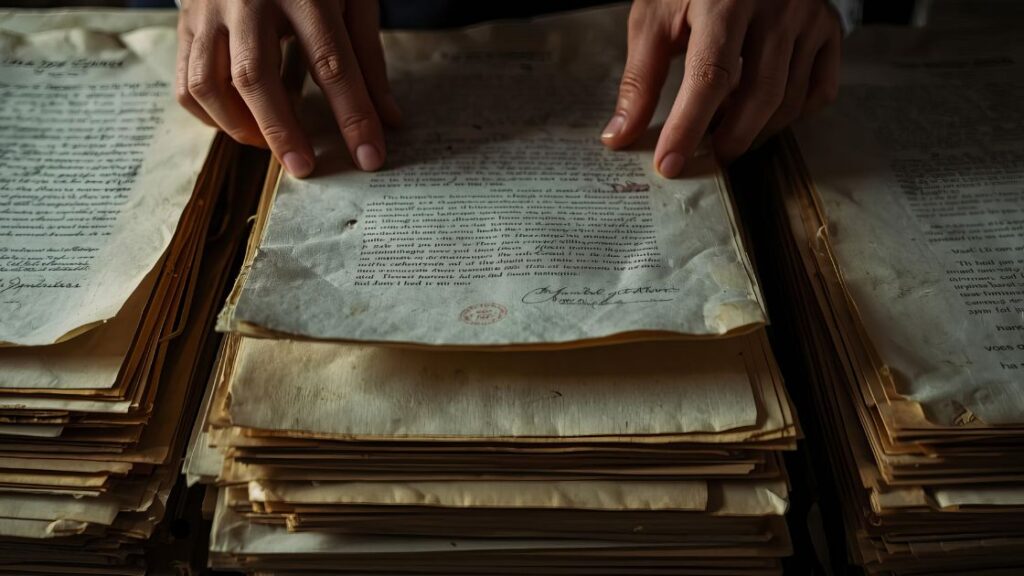
Let’s be honest. Social studies is one of the hardest content areas for Multilingual Learners (MLLs). It is not just the vocabulary, though there is a lot of it. It is everything at once: dense texts, abstract concepts like democracy and citizenship, multiple perspectives to hold in your head, and then on top of all that, you ask kids to analyze a primary source they have never seen before. That is a heavy lift for any student, let alone one still building their English proficiency.
But here is what I have seen consistently: when we give MLLs the right support, they do not just complete the work. They think deeply about it. The keyword is intentional. Not watered-down tasks, not skipping the hard stuff, but scaffolds that open the door so students can actually walk through it.
So what makes primary source analysis so hard for MLLs, specifically?
It is not one thing, it is the pile-up. Historical texts are full of passive voice, abstract nouns, and cultural references that even native English speakers trip over. And then we ask students to simultaneously learn content and think like historians, observing, interpreting, building arguments from evidence. That is a lot to manage when you are also translating in your head.
What research and classroom experience both tell us is that we need to reduce cognitive load without reducing rigor. Those two things are not the same, and it is worth saying out loud, especially when administrators are watching. Yoder, Kibler, and van Hover (2016) found in their meta-synthesis that effective instruction for English Language Learners in social studies consistently paired language support with disciplinary thinking, not one at the expense of the other.
What MLLs actually need
A few things show up again and again in the research and in real classrooms.
Explicit vocabulary instruction before the source, not after. Words like evidence, perspective, and claim are not just historical vocabulary. They are the language of analysis itself. If students do not own those words going in, they are working with one hand tied behind their back. Szpara and Ahmad (2007) pointed to this directly, noting that social studies teachers need to front-load the language of the discipline, not assume students will pick it up along the way.
Visual supports matter too. Graphic organizers, icons, images, anything that lets students access the thinking task even when the English is still a barrier. A well-designed organizer can do a lot of the heavy lifting before a single word gets written.
Predictable routines are probably the biggest one. When the structure of a task stays the same, students can put their energy into the history, not into figuring out what they are supposed to do. Consistency builds independence over time, and that is the goal.
Language and content need to be woven together, not taught separately. De Oliveira and Obenchain make this case clearly: students learn academic language through doing meaningful historical work, and instruction works best when it is designed that way from the start. Kim and Wynne (2021) reinforced this point, emphasizing that the best learning environments for K-8 English Learners integrate language development into content rather than treating it as a separate intervention.
A strategy worth trying: The Source Snapshot
One routine that works well in practice is something I call the Source Snapshot. The idea is simple. Three consistent questions that students apply to any primary source:
- What do you observe? Just what you literally see or read, no interpretation yet.
- What is the main idea? What is this source mostly about? What was the creator trying to communicate?
- What is your evidence? What specific detail supports your claim?
You can think of it as: See It, Name It, Prove It.
That sequence mirrors what historians actually do, but it breaks the process into steps students can manage. For MLLs especially, seeing the thinking made visible before being asked to do it independently makes a real difference.
How to differentiate without losing rigor
What makes this routine useful is that the structure stays the same for everyone, but the entry point can shift depending on where students are.
Newcomers can draw their observations instead of writing them, use picture-supported vocabulary cards, and point to evidence within the source rather than explaining it in writing. That is still historical thinking. It just looks different.
Developing MLLs can lean on sentence frames. “I observe ______.” “This source is mostly about ______.” “I know this because ______.” Frames like these give students a place to start without doing the thinking for them.
Expanding and bridging students can write complete main idea statements, explain how their evidence connects to their claim, and begin analyzing author perspective and purpose. The scaffold is still there if they need it, but most of them will not.
Because the routine does not change, you can use it with photographs, political cartoons, maps, letters, speeches, government documents, artwork, charts, and graphs. Students learn the process once and carry it into every new source they encounter. That kind of transfer is hard to build, and this routine helps.
The bigger picture
Too many supports for MLLs are designed just to help students get through an assignment. That is a low bar. What we actually want is for our MLLs to think like historians. To observe carefully, build claims, and back them up with evidence. Those skills matter far beyond our classrooms, and they are absolutely within reach for multilingual students when we teach them directly. Szpara and Ahmad (2006) argued that making social studies meaningful for ELL students is not about simplifying the content. It is about making the thinking visible and giving students the tools to participate in it.
There is also something worth naming about what it means for students to see themselves in this work. When MLLs are positioned as active participants in historical inquiry, not just students trying to keep up, the dynamic in the classroom shifts. They bring perspectives to primary source analysis that other students do not have. That is an asset, and the best instruction treats it that way.
Scaffolds like the Source Snapshot make the invisible processes of historical thinking visible. That is good teaching for every student. For MLLs, it is the difference between surviving a lesson and actually owning it.
That is worth the planning it takes to get there.
References
de Oliveira, L. C., & Obenchain, K. (Eds.). Teaching History and Social Studies to English Language Learners.
Kim, J. Y., & Wynne, M. J. (2021). Providing the best possible learning environment for K-8 English Learners in social studies content.
Szpara, M., & Ahmad, I. (2007). Supporting English-Language Learners in social studies class.
Szpara, M., & Ahmad, I. (2006). Making social studies meaningful for ELL students.
Yoder, P., Kibler, A. K., & van Hover, S. (2016). Instruction for English Language Learners in the social studies classroom: A meta-synthesis.






1 Comment
As a gifted resource teacher, I love how the See It-Name It-Prove It strategy preserves the rigor for the MMLs. Just because they aren’t fluent in English, doesn’t mean they aren’t smart or gifted. Love this resource! Thank you for your post.
Log in to leave a comment