
By Patrick Hussey
Last summer, I interned at Strawbery Banke Museum in Portsmouth, NH, as a member of the education team. In that role, we often discussed how to approach hard histories.
Hard histories are topics that require extra care, preparation, and support in the classroom because they involve complex or challenging aspects of the past (Jeffries, 2018; Learning for Justice, n.d.).
During my internship, I was confronted with topics like slavery and had to find a way to engage my campers. It was not easy. Still, just because a historical topic is difficult does not mean we should avoid teaching it; if anything, we owe it to our students, or, in my case, campers, to help them engage.
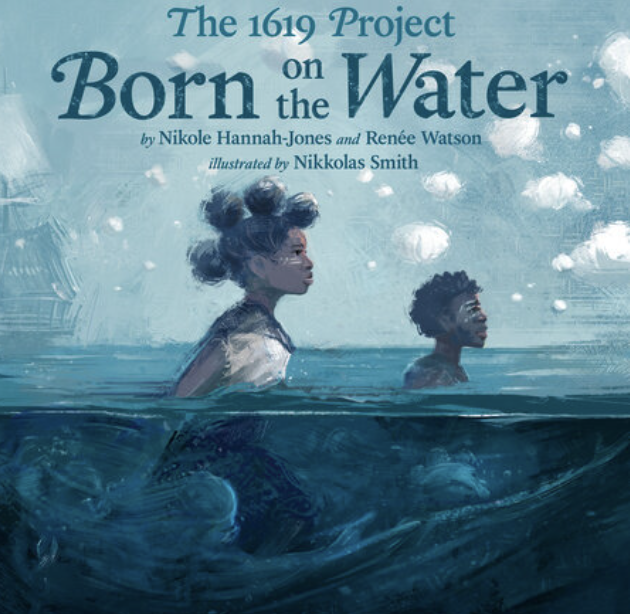
I vividly remember a camp where I was tasked with teaching nine- to eleven-year-olds about slavery, which made me nervous, as I questioned how a first-year master’s student could be prepared for such a vital subject. I asked my colleagues for advice, and they encouraged me to take on the challenge. The main concern wasn’t the difficulty itself but figuring out how to discuss slavery and its impact, so I chose to educate myself on the topic and share a story with the campers. I read The 1619 Project: Born on the Water by Nikole Hannah-Jones and Renée Watson. It tells the story of a young girl who is given a school assignment to explore her roots. As the story develops, readers learn about the complexities stemming from the legacy of slavery.
This story broke away from the traditional Eurocentric textbook narrative that often dominates history (Stanton, 2015), and this different approach helped me present a difficult historical subject in a way that was engaging and made it easier for my campers to engage in tough conversations. Is the challenge with hard histories finding ways to teach it, or having materials that present history in diverse, positive ways? Maybe a bit of both if I had to guess.
A 2023 report found that “children gain immense benefits from representationally diverse curricula that allow students to see themselves and others in complexity” (Marshall and Rodick, 2023, para. 1). Tanji Reed Marshall and William Rodick (2023, para. 5), the creators of this report, recommended that while educational standards vary across the country and abroad, we should
- Challenge dominant norms and singular perspectives
- Expand publisher and educator definitions of cultural relevance
- Ask a new set of questions about representation
- Consider how texts sit in conversation with one another
- Expand educator choice in curated materials
- Provide professional learning to all curriculum decision-makers, including authors and developers
Embracing Hard Histories: The Guide
Sharing The 1619 Project: Born on the Water has been a great way to introduce my campers to so-called hard histories and unknowingly I became involved in repairing educational standards through involving diverse and creative texts in my teaching. With a few simple strategies, anyone can engage with and teach hard histories, whether through a presentation, reading a book, watching a movie or documentary, or simply facilitating a classroom conversation.
Sam Futrell, a master teacher at Strategic Cultural Partnerships, who reintroduced “hard histories” into my vocabulary, adapted several steps from Learning for Justice that really helped me see the nuance and benefit of engaging hard histories. See the guide below for tips, tricks, and helpful commentary 🙂
| Learning for Justice | Tips & Tricks | Patrick’s Commentary |
| Be ready to talk about race. | “Don’t avoid it—create space for honest, age-appropriate conversations that help students make sense of the past and present” (Learning for Justice, n.d.) | I chose to use a book to broach the subject of race because it encouraged the campers to ask questions, but there are other ways to approach this topic. For example, you as an educator could “organize a time for students to create art – visual or written – that reinforces and honors our common humanity, while celebrating the distinct differences that make our communities vibrant” (Race Forward, 2019). |
| Teach about commonalities. | “Help students see shared humanity across groups, even in moments of deep division and conflict” (Learning for Justice, n.d.) | Highlight that race is a social construct rather than a biological fact. Focus on shared human experiences like food and art. At camp, we enjoyed dishes from different cultures and encouraged students to describe the foods in ways that showcase what we share, like the mediums we all engage with. This approach beautifully shows both our diversity and our commonalities. |
| Center the stories of enslaved people. | “This includes both the oppression they endured, and the joy and communities that they built in the midst of that oppression” (Learning for Justice, n.d.) | Before engaging with campers me and other interns at Strawbery Banke went on a Black Heritage Trail tour. I think being able to see the geography and hear the stories of the enslaved on this walk really helped me find comfort before speaking to campers. So before any educator goes to teach a topic I recommend you have an understanding or at least a deeper knowledge of the histories. That could mean engaging in your own extracurricular learning through a field trip or experience. |
| Embed civics education. | “Connect historical content to the skills and responsibilities students need to participate in a democracy” (Learning for Justice, n.d.) | I have never taught civics, but I consider myself a civically engaged person. One way I express that engagement is by observing how society changes over time. Futrell describes scaffolding primary sources with secondary sources, and I think this approach can help students recognize shifts in how people and society function. Scaffolding requires you to often engage first with messy primary sources and assess them for their meaning, then find secondary sources to not only engage with them at the time they were produced, but also find a way to associate with the present. |
| Teach about conflict and change. | “Show how disagreement, resistance, and struggle have always been part of how societies evolve” (Learning for Justice, n.d.) | Futrell mentions acknowledging primary sources; use of conflicting and harmful language, and I want to emphasize this because I remember, throughout my educational experience, finding words that just felt wrong. But we must find ways to tell students that some language from the past would not be acceptable today. I developed an activity in another “words that hurt and why” while being a resident assistant in college. Although I did not utilize this activity in my capacity as an educational intern at Strawbery Banke, it was always in the back of my mind, and I would encourage others to adapt it for their use. It makes one consider their use of language and understand that sometimes words can have intended and unintended consequences. |
Conclusion
Wow, that was a lot 😅, but it was absolutely worth it! Breaking down complex concepts like hard histories and finding small, manageable strategies is essential to the future of education. I highly recommend taking the lilyPD course The Horizon of Independence, as everyone can truly benefit from Futrell’s insights through her commentary, podcasts, and engagement with sources. Beyond all of this, my final takeaway centers on the crucial role of intentionality.
We need to be more intentional—all of us, but especially educators—about the topics we teach and be honest about what we do not. For instance, I recently read an influential book about slavery with a group of nine- to eleven-year-olds. It was my first time doing anything like that, and I think it went well because I went into it determined to do my best and provide them with the most thoughtful presentation I could.
So my advice: engage with the difficulty and do not be afraid to get things wrong because you will be a better educator and your students will benefit.
Register for our FREE course The Horizon of Independence.
Work Cited
Hannah-Jones, N., & Watson, R. (2022, February 24). “Born on the water” gives black children in America their origin story (J. Fuller, Interviewer) [Interview]. In National Public Radio.
Jeffries, H. K. (2018). Understanding and teaching American slavery. University of Wisconsin Press.
Learning for Justice. (n.d.). Teaching hard history: American slavery. Southern Poverty Law Center. https://www.learningforjustice.org/frameworks/teaching-hard-history/american-slavery
Marshall, T., & Rodick, W. (2023). The search for more complex racial and ethnic representation in grade school books. https://edtrust.org/wp-content/uploads/2014/09/Curriculum-Report-FINAL.pdf
Race Forward. (2019). 10 Ways To Start a Conversation About Race | Race Forward. Raceforward.org. https://www.raceforward.org/10-ways-start-conversation-about-race
Stanton, C. R. (2015). Beyond the margins: Evaluating the support for multicultural education within teachers’ editions of US history textbooks. Multicultural Perspectives, 17(4), 180-189.

Patrick Hussey holds a Master’s Degree in Socio-Cultural Anthropology from the College of William & Mary and a Bachelor of Arts in Communication and Educational Studies from the University of New Hampshire. He has interned at Strawbery Banke Museum in Portsmouth, NH, and Strategic Cultural Partnerships with the College of William & Mary in Williamsburg, VA. He also worked as a data specialist for the 1871 Canadian Census Project.







Log in to leave a comment